Quick Summary
- The first 72 hours of a social media detox brain recovery are the hardest. Craving, boredom, and compulsive phone-checking are real neurochemical responses, not personal weakness.
- Social media withdrawal symptoms peak around days 2-3 as your brain’s dopamine system, adapted to constant variable rewards, enters a recalibration period.
- Dopamine receptor recovery is gradual: animal and addiction research suggests receptor sensitivity begins normalizing after roughly 7-14 days of abstinence, though no human neuroimaging study has directly measured this timeline for social media specifically.
- A 2025 meta-analysis found no significant overall effect of abstinence on life satisfaction. Benefits depend heavily on what you replace social media with and whether your use was problematic to begin with.
- The JAMA Pediatrics U-shaped curve (100,000+ adolescents) shows moderate use correlates with better well-being than either heavy use or complete non-use. The goal is balance, not zero.
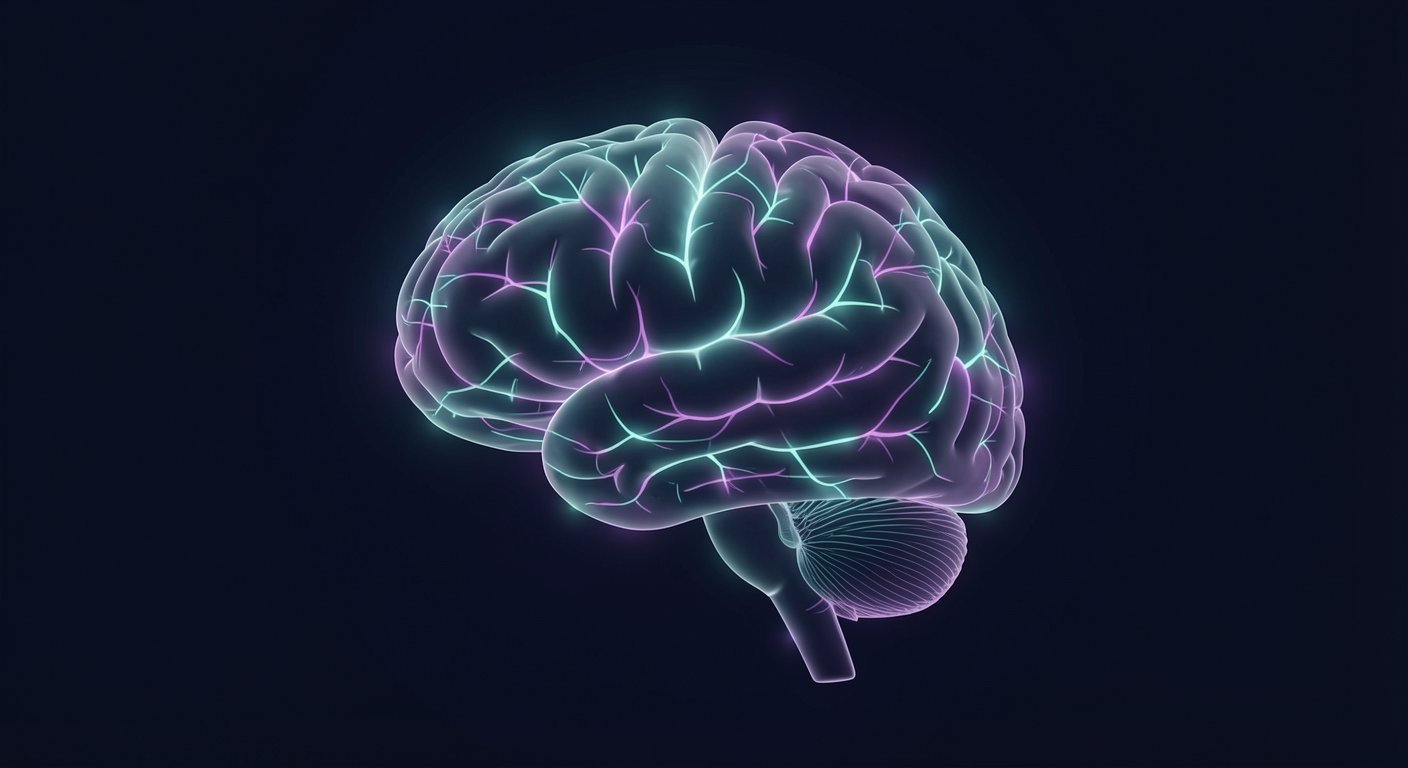
You decide to take a break from social media. By day two, you are crawling out of your skin, restless, bored, reflexively reaching for a phone that no longer has Instagram on it. Your thumb moves toward an empty spot on the home screen seventeen times before lunch. You feel like something is missing, and in a neurological sense, something is. Your brain is not broken. It is healing. Here is what the neuroscience says about social media detox brain recovery, what you can actually expect day by day, and why the first 72 hours feel so much like withdrawal from a drug.
Why Your Brain Feels Broken in the First 72 Hours
Social media platforms are engineered on variable reward schedules, the same psychological principle that makes slot machines addictive. You never know when you will get a like or a notification. This unpredictability maximally stimulates the brain’s dopamine system, specifically, the pathway from the ventral tegmental area (VTA) to the nucleus accumbens, the same reward circuit hijacked by substance addictions and gambling.
When this reward stream is constant, the brain adapts. Dopamine D2 receptors gradually downregulate. They become less sensitive and less numerous because the system is flooded with stimulation. A two-minute check becomes a forty-minute scroll. A 2026 study found that even 30 minutes of social media scrolling acutely impairs working memory (Mittal et al., 2026).
When you stop cold, the downregulated system is suddenly starved of its expected reward stream. Dopamine drops below baseline, a phenomenon called reward prediction error, discovered by neuroscientist Wolfram Schultz. That restless, crawling-out-of-your-skin feeling is genuine dopamine receptor recovery beginning, not a sign that you need social media to function.
The Social Media Detox Brain Recovery Timeline: Day by Day
A digital detox timeline follows a predictable arc, though individual experiences vary widely. The research on social media detox brain recovery points to several distinct phases, each with its own set of challenges and changes.
Days 1-3: Peak Withdrawal
These are the hardest days. Stieger and Lewetz (2018) tracked 152 participants through a 7-day social media abstinence period and found significant spikes in craving, boredom, and social pressure to return. 59% of participants relapsed at least once. The craving is not imaginary. It is a measurable neurochemical response as your brain’s dopamine system begins its recalibration.
Social media withdrawal symptoms include compulsive phantom phone-checking, irritability, and a diffuse sense of unease, the brain’s reward prediction error signals firing at full volume. This feeling peaks and then it passes. It is the withdrawal curve, not a permanent state.
Days 4-7: The Turn
By day four or five, the acute craving typically begins to subside. The brain’s dopamine system starts its gradual recalibration. Receptors slowly begin restoring sensitivity as the system adapts to the absence of constant digital rewards. Natural pleasures start registering again: a conversation, finishing a task, the taste of food.
A 2023 study found that restricting social networking site use for one week reduced negative affect, but it also reduced positive affect (Wadsley & Ihssen, 2023). Removing social media cuts both ways. You lose the bad (comparison, envy) but also the good (connection, humor). This is why attention restoration after social media depends so heavily on what fills the gap. Passive alternatives like TV do not produce the same cognitive benefits as active ones like exercise or in-person socializing.
Days 8-14: Measurable Change
At the two-week mark, the science starts showing measurable shifts. A 14-day abstinence study found decreases in screentime and body image dissatisfaction, with depression and loneliness declining during the intervention period (de Hesselle & Montag, 2024). The brain’s prefrontal cortex, responsible for sustained attention and impulse control, gets more uninterrupted time without constant task-switching.
A 2026 study of 842 adults found intentional technology use was positively associated with attentional control, while passive use was negatively associated, independent of total screen time (Wang et al., 2026). A focused ten-minute video call is neurologically different from forty minutes of passive scrolling.
Weeks 3-4: Integration
The landmark Hunt et al. (2018) trial found that limiting social media to 30 minutes per day for three weeks significantly reduced loneliness and depression. Allcott et al. (2020) found that deactivating Facebook for four weeks increased subjective well-being and led people to spend more time on offline activities.
By week four, the brain’s default mode network, the system active during mind-wandering and creative thinking, gets more uninterrupted time. Restoring that capacity for unstructured mental processing is one of the most underappreciated benefits of a sustained break.

What the Science Actually Says: The Full Picture
A 2025 meta-analysis by Lemahieu et al. pooled 38 effect sizes from 10 studies with 4,674 participants and found no significant overall effect of social media abstinence on positive affect, negative affect, or life satisfaction. The benefits are real for some people but not universal, and they depend heavily on context.
At the same time, a systematic review found that 70% of studies showed significant improvement in depression after social media interventions (Plackett et al., 2023). The people who benefit most tend to be those with higher baseline symptom severity.
The JAMA Pediatrics U-shaped curve adds another critical piece. In a longitudinal study of over 100,000 adolescents, Singh et al. (2026) found that both heavy use and complete non-use were associated with lower well-being compared to moderate use. The sweet spot was 0 to 12.5 hours per week. Extremes in either direction correlate with worse outcomes. Moderate, intentional use appears to be the healthiest relationship for most people.
It is worth noting what the research cannot tell us. No human neuroimaging study has directly measured dopamine receptor recovery during social media abstinence. The timeline is inferred from addiction neuroscience and behavioral studies on related conditions, not directly observed. The science is suggestive, not definitive.
The 4-Step Social Media Detox Reset Plan
Step 1: Delete and Distance (10 Minutes)
Remove social media apps from your home screen, or your phone entirely. The friction of having to reinstall or navigate to a browser version cuts reflexive checking by creating a pause between impulse and action. Tell one or two people you are taking a break so social pressure does not pull you back.
Step 2: Prepare Replacement Activities (5 Minutes)
Have a short list of 5-minute alternatives ready: stand and stretch, look out a window, text one real friend directly, write one sentence about what you are feeling, or do ten pushups. The craving passes faster when you have a specific next action instead of white-knuckling through it.
Step 3: Set a Moderation Target, Not a Zero Goal (Ongoing)
The evidence strongly favors moderation over total abstinence for long-term well-being. Use your phone’s built-in screen time limits to cap social media at 30 minutes per day, the threshold that produced significant mental health improvements in the Hunt et al. (2018) trial. The goal is intentional use, not zero use.
Step 4: Track Your Mood for Two Weeks (2 Minutes Daily)
Rate your mood, focus, and anxiety on a simple 1-10 scale each evening. Your individual data is more relevant than any meta-analytic average. Some people feel dramatically better within days; others feel worse before they feel better. Knowing your own pattern prevents you from quitting at the worst possible moment.
Common Mistakes That Make Detox Harder
Going from six hours of scrolling to cold turkey with no plan. The 59% relapse rate in the Stieger and Lewetz study was not about weak willpower. It was about approaching detox without preparation. Have your replacement activities ready before you start.
Replacing social media with equally passive alternatives. Switching from Instagram to YouTube is a lateral move neurologically. The attention restoration benefits of detox come from replacing passive consumption with active engagement, moving your body, talking to people, making things.
Interpreting the first three days as evidence that you need social media to cope. The acute withdrawal phase is a neurochemical response to dopamine downregulation, not a signal that social media is serving a necessary function in your life. Do not confuse craving with need.
Expecting a linear improvement curve. The 2025 meta-analysis null result is not a failure of detox. It is a reflection of how individual this process is. Some people improve dramatically, some stay the same, some feel worse. Your results depend on your starting point, what you replace social media with, and whether your use was problematic to begin with.
Your Turn: Sit With This
When you reach for your phone without thinking, what feeling were you trying to escape? Boredom? Anxiety? Loneliness? The answer to that question, not the phone, is where the real work begins.
This article is for informational purposes about social media detox brain recovery and does not constitute medical advice. If you are experiencing significant mental health concerns, please consult a qualified healthcare professional.
- Phone Notifications Are a Slot Machine in Your Pocket, why each buzz triggers the same brain circuit as a casino lever pull
- Doomscrolling: Why Your Brain Can’t Stop, the neuroscience behind endless bad-news scrolling and how to interrupt it
- Digital Habit Loops: How Your Phone Trained You to Check It 96 Times a Day, breaking the cue-routine-reward cycle