Reading Time: 4 Minutes
What Happens When You Quit, Week by Week
Most people never try a social media fast because they don’t know what to expect. The unknown is scarier than the known, even when the known is making you miserable. Here’s exactly what neuroscience says happens to your brain when you step away from the algorithm for 30 days.
Quick Summary
- A 30-day social media fast produces measurable changes in brain function, including reduced dopamine sensitivity to digital rewards and improved attention span
- Research shows withdrawal symptoms peak around day 3-5, then steadily decline as the brain recalibrates its reward pathways
- Participants report improved sleep quality, reduced anxiety, and more meaningful real-world social connections by week two
- The key to lasting change is a structured re-entry plan, without one, most people return to baseline usage within 2 weeks of ending the fast
Week 1: The Withdrawal

The first 3-5 days are the hardest. Your brain is accustomed to a steady drip of dopamine from notifications, likes, and novel content. When you cut the supply, your dopamine receptors, which have been downregulated from chronic overstimulation, need time to reset.
Expect: restlessness, phantom phone-checking, boredom you haven’t felt in years, maybe irritability. This is normal. It’s not proof you “need” social media. It’s proof your brain was overstimulated. Research on dopamine fasting shows that the acute discomfort peaks around day 3 and begins fading by day 5.
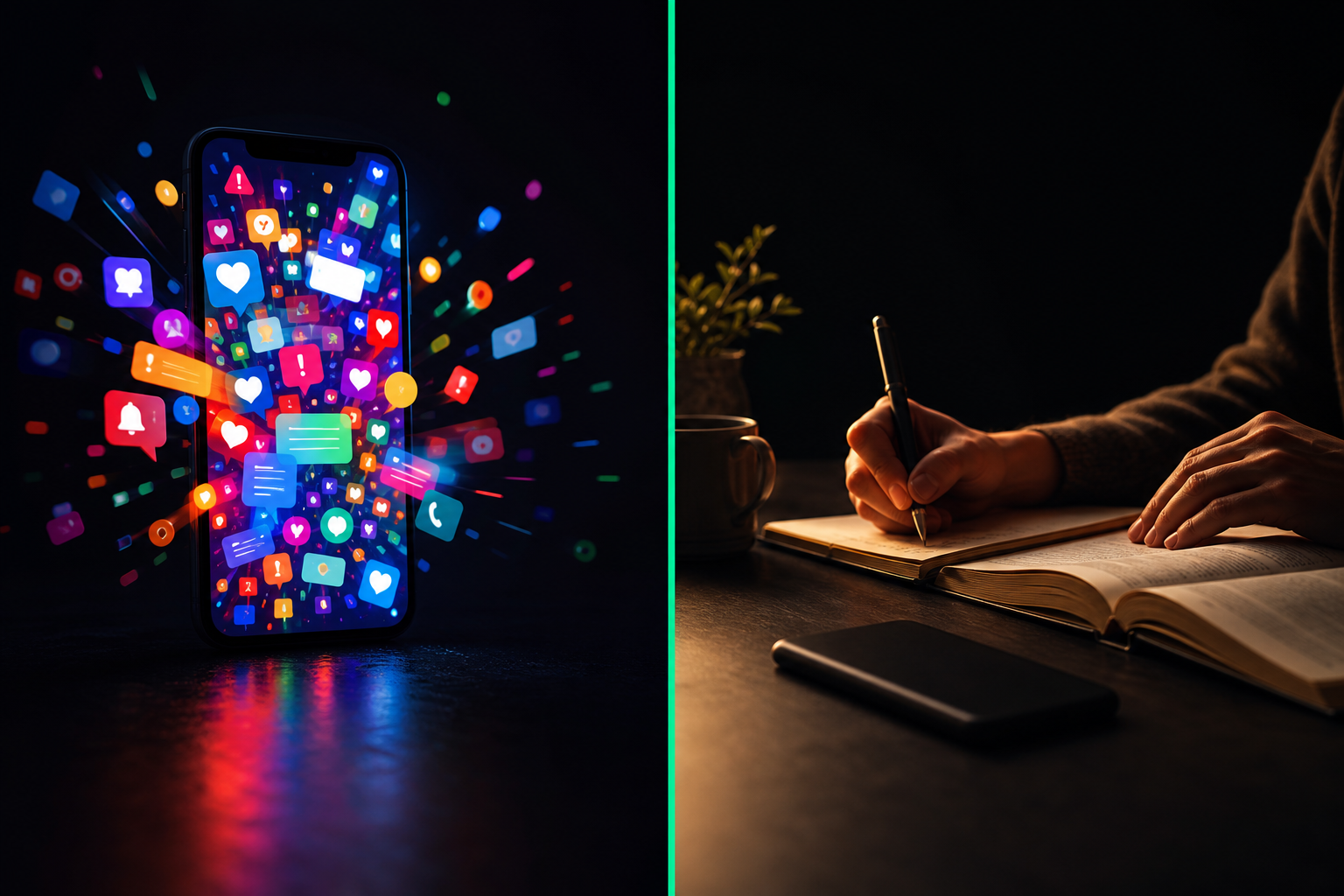
What helps: replace the ritual. When you’d normally open Instagram, do something with your hands, a physical book, a journal, a walk. Your brain needs a new default, not just an absence.
Week 2: The Recalibration
Around day 7-10, something shifts. The phantom buzzing fades. Your baseline anxiety, especially that low-grade hum of comparison and FOMO, starts dropping. This isn’t placebo. Studies show that just one week without social media significantly reduces cortisol levels and improves self-reported well-being.
You’ll start noticing how much time opened up. The average person spends 2.5 hours per day on social media. That’s 17.5 hours reclaimed in week one alone. By week two, you’re starting to fill that time with actual life.
What helps: lean into the boredom. Boredom is where creativity lives. Your best ideas don’t come while scrolling, they come in the quiet spaces your phone used to fill.
Week 3: The Deep Rewiring

This is where the neuroscience gets interesting. After about 15-21 days without the constant dopamine hits from social media, your brain’s reward system begins to re-sensitize. Activities that felt dull before, a conversation without your phone, a walk without a podcast, reading a book for 30 minutes, start feeling genuinely rewarding again.
Your attention span, which had been fragmented by constant context-switching (the average person switches tasks every 40 seconds when working on a computer), begins stitching back together. You can read for longer. Conversations feel richer. You’re present in a way you haven’t been in years.
What helps: use this clarity to audit your relationship with technology. Which apps serve you? Which ones serve their shareholders? Decide now what you’ll let back in.
Week 4: The Decision
By day 30, you have a choice to make. Most people who complete a 30-day fast report they don’t want to go back, at least not to the way things were. The research backs this up: a study in the Journal of Social and Clinical Psychology found that limiting social media to 30 minutes per day significantly reduced loneliness and depression over just three weeks.
You don’t have to quit forever. But you can’t unsee what you’ve learned: that the algorithm was never on your side, that your attention is worth more than advertisers pay for it, and that life feels fuller when you’re living it instead of scrolling through it.
How to Do the Fast Without Losing Connections
- Tell people ahead of time. Post once: “Taking a 30-day break from social media. Text me if you need me.” Then delete the apps.
- Keep messenger apps if needed. WhatsApp, Signal, iMessage, these are communication tools, not algorithmic feeds. Keep them.
- Schedule real connection. A 10-minute phone call with a friend replaces hours of passive scrolling through their updates.
- Have a plan for FOMO. Write down what you’re afraid of missing. Look at it honestly. How much of it is actual connection vs. fear of being out of the loop?
The Bottom Line
A 30-day social media fast isn’t about quitting technology. It’s about resetting your baseline. It’s about proving to yourself that you control the apps, they don’t control you. Most people spend years wondering if they could live without social media. You can find out in 30 days. Start tomorrow.