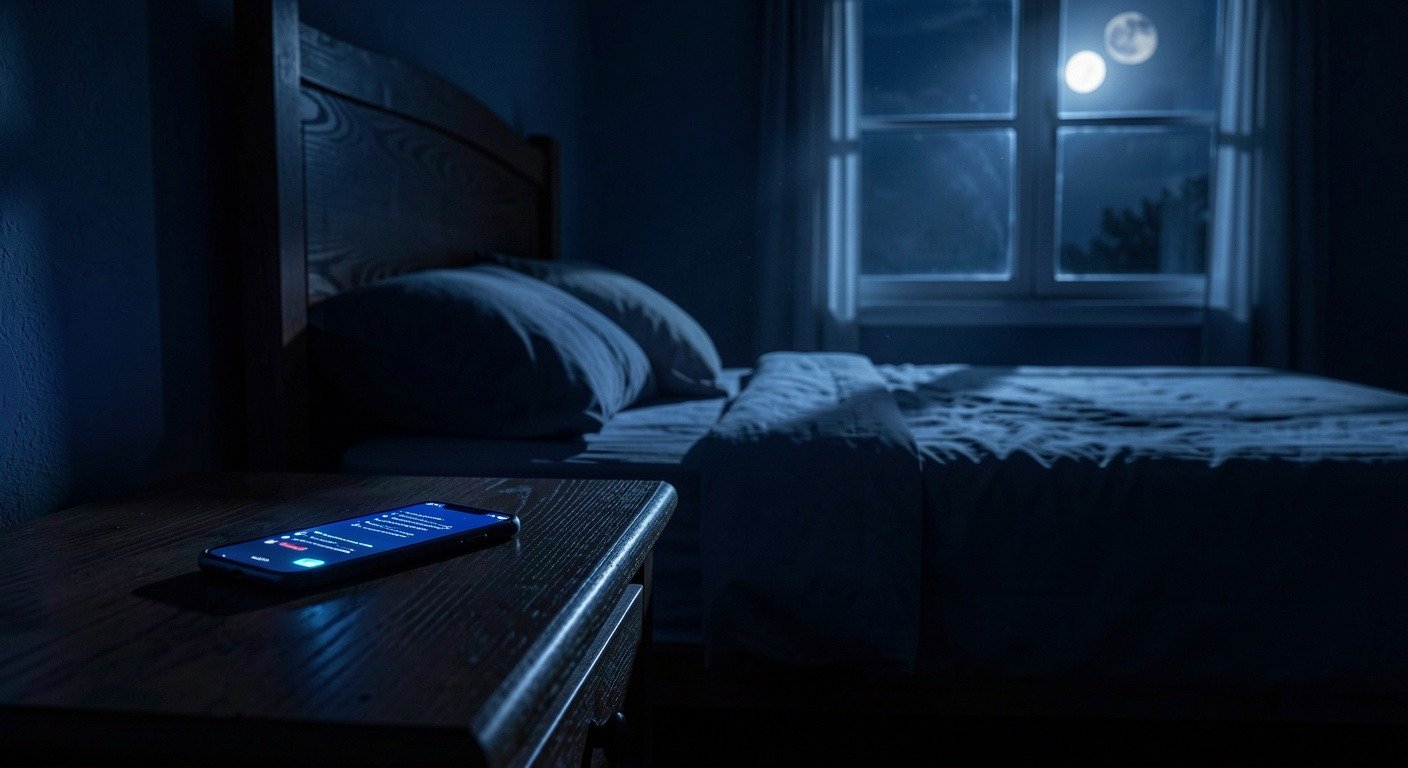
You tell yourself you’ll just check one thing. A message. A notification. The weather for tomorrow. And then suddenly forty-five minutes have disappeared, your eyes are burning, and the sleep you meant to get is already compromised.
You are not weak. You are not undisciplined.
Your phone was literally engineered to keep you scrolling. The same design pattern that makes slot machines addictive — variable rewards — is built into every social media feed, every notification ping, every “pull to refresh” animation. And when you bring that into your bedroom, you bring a slot machine to your pillow.
This article explains exactly what bedtime scrolling does to your sleep, why stopping is harder than it sounds, and what actually works to break the cycle — starting tonight.
What Happens When You Scroll Before Sleep

The science is clear, and it has been getting clearer. A major study published in JAMA Network Open analyzed over 122,000 adults and found a direct dose-response relationship: the more screen time before bed, the worse the sleep. Less total sleep. Lower quality. More difficulty falling asleep.
But here is where most advice goes wrong. The problem is not just blue light.
A 2026 BBC Future analysis reviewed the latest research and found something surprising: the blue light from your phone screen only delays sleep by about nine minutes at worst. That is not nothing, but it is not the main culprit either.
The real problem is your brain staying switched on.
Your phone does not just emit light. It delivers content. Social media feeds designed to trigger emotional reactions. News headlines selected to provoke outrage or anxiety. Work emails that stir up tomorrow’s stress. Short videos that send your dopamine system into a loop of anticipation and reward.
You are not resting. You are processing. Your brain interprets every swipe as something potentially important — something worth staying alert for. And so it does.
A randomized controlled trial found that when people restricted mobile phone use before bedtime for four weeks, they fell asleep faster, slept longer, and reported better sleep quality. The difference was not subtle — it was measurable and consistent.
The Cleveland Clinic puts it plainly: three things happen when you bring your phone to bed. Mental stimulation keeps your brain active. Blue light suppresses melatonin, the hormone that signals sleep. And the content itself — a stressful message, an upsetting news story — triggers cortisol and adrenaline, the opposite of what you need before sleep.
Why You Cannot Just Stop
If it were as simple as deciding to put the phone down, you would have done it already.
The mechanism at work is called intermittent variable reward. Every time you open an app, you do not know what you will find. Sometimes it is boring. Sometimes it is a message from someone you care about. Sometimes it is a notification that makes you feel important. Your brain learns that checking might pay off — and because the reward is unpredictable, the behavior becomes compulsive.
This is the same psychological pattern that makes gambling addictive. It is not a metaphor. The designers of these platforms have said so in interviews and conference talks. The pull-to-refresh gesture was explicitly modeled on a slot machine lever.
So when you lie in bed at 11:30 PM telling yourself “just five more minutes,” you are not fighting a bad habit. You are fighting a multi-billion-dollar attention economy that has optimized itself to keep your eyes on the screen and your thumb moving.
What Actually Works
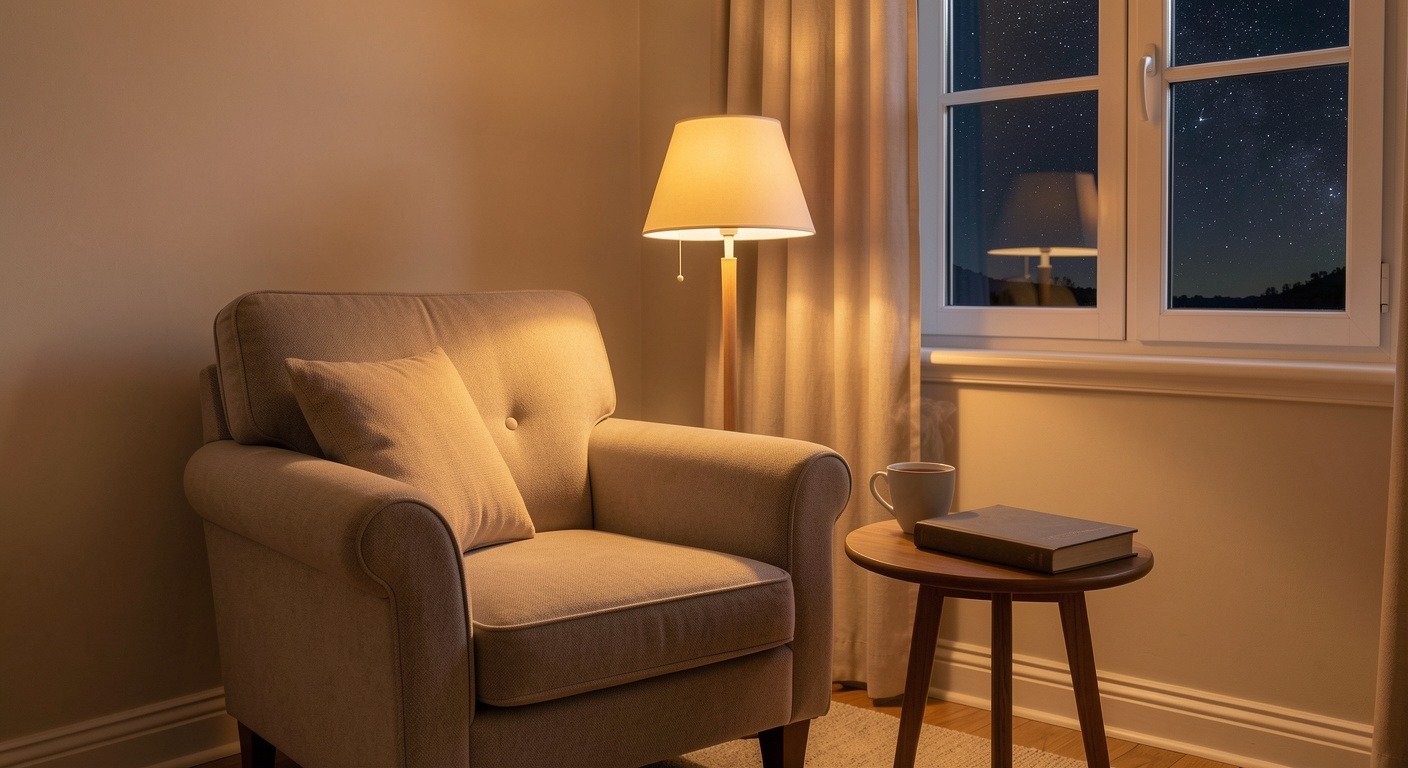
The good news is that a small, structured intervention can break the loop. Here is what the research and clinical experience support.
Set a 30-minute screen curfew. The Sleep Foundation and multiple studies agree: stopping screen use thirty to sixty minutes before bed significantly improves sleep quality. Pick a time — say 10:30 PM — and make it non-negotiable. Your phone goes to a different room, or at minimum across the bedroom where you cannot reach it from bed.
Replace the scroll with a wind-down ritual. Your brain needs a transition signal. Scrolling is active, alert, processing mode. What you need is a sequence that tells your nervous system: the day is over. Read a physical book. Write in a journal. Do five minutes of slow breathing or gentle stretching. Make a cup of herbal tea. The specific activity matters less than the consistency — doing the same thing every night trains your brain to expect sleep.
Change your phone setup. Grayscale mode reduces the visual reward of your screen. Moving social media apps off your home screen adds friction. Setting up a Downtime schedule through your phone’s settings can lock you out of apps automatically. None of these tricks will stop you if you are determined to scroll, but they make the automatic, half-conscious reach for your phone much harder to follow through on.
Charge your phone outside the bedroom. This is the single highest-impact change most people make. If your phone is in the kitchen or the living room, the bedtime scroll cannot happen. You can still use an alarm — buy a basic alarm clock for ten dollars. Your sleep is worth more than ten dollars.
The 7-Day Reset Connection
If you are reading this and recognizing yourself, you are exactly the person the 7-Day Dopamine Reset was designed for.
The Reset gives you a structured, day-by-day plan to reduce digital overstimulation across your whole day — not just at bedtime. When your brain is less bombarded by notifications, infinite scrolls, and dopamine-triggering apps during the day, winding down at night becomes dramatically easier.
Think of it this way: if you spend twelve waking hours in high-stimulation mode, expecting your brain to switch off in thirty minutes is unrealistic. The Reset rebuilds your baseline so that sleep comes naturally.
Common Mistakes
Mistake 1: Using night mode and thinking it fixes everything. Night Shift and similar features reduce blue light, but they do nothing about the mental stimulation from content. Your brain still processes the information, the emotions, and the social comparisons. You are just doing it with a warmer screen tint.
Mistake 2: Replacing phone scrolling with tablet scrolling. Switching devices does not solve the problem. The issue is the behavior pattern and the content, not the specific piece of glass in your hand.
Mistake 3: Trying to quit cold turkey with no replacement. Telling yourself “I will never look at my phone before bed again” without building a replacement habit almost always fails. Your brain needs something to do during that wind-down window. Give it a book, a podcast (audio only, no screen), or a simple ritual.
A Simple Action Plan for Tonight
- Set your screen curfew time right now — 30 minutes before your target bedtime.
- Move your phone charger out of the bedroom.
- Choose one wind-down activity you will do instead (book, journal, stretching, tea).
- When the curfew hits, do not negotiate. The phone goes away and the wind-down begins.
- Tomorrow morning, notice how you feel. Write it down. Use that feeling as motivation for night two.
Final Thought
Your sleep is not a luxury. It is the foundation your focus, your mood, your decision-making, and your long-term health are built on. Every minute you scroll before bed is a minute of deep sleep you are trading away — and your brain keeps the receipt.
You do not need more willpower. You need better defaults and one small change tonight.
Stop scrolling. Start sleeping. Your brain will thank you tomorrow.
Wellness Disclaimer: This article is for informational and educational purposes only. It is not a substitute for professional medical advice, diagnosis, or treatment. If you are experiencing chronic insomnia, sleep disorders, or mental health concerns, please consult a qualified healthcare provider.