
Reading Time: 7 Minutes
The Blue Light Obsession: How We Got Distracted by the Wrong Villain
For the better part of a decade, the conversation around screens and sleep has revolved around a single wavelength: blue light. Blue-blocking glasses became a multi-billion-dollar industry. Night Shift and Night Light modes shipped on every device. The narrative was clean and compelling, screens emit blue light, blue light suppresses melatonin, suppressed melatonin means poor sleep. Buy these glasses, install this app, problem solved.
Quick Summary
- Blue light from screens plays only a minor role in sleep disruption — studies show blue-light filtering improves sleep onset by just 2–5 minutes on average
- The real sleep killers are cognitive arousal from engaging content, time displacement (staying up later scrolling), and psychological carryover from what you consumed before bed
- Each hour of in-bed phone use costs roughly 50 minutes of actual sleep — time displacement accounts for ~85% of the sleep deficit
- A 90-minute screen curfew before bed, combined with a “content gradient” that shifts from stimulating to calm as bedtime approaches, is far more effective than blue-light glasses alone
There’s just one issue: the story is incomplete. By 2026, the accumulated evidence paints a more nuanced picture, one where blue light plays a role, but a smaller one than most people think, and where the real sleep disruptors are behavioral and psychological rather than purely photic. Let’s look at what the data actually says.
The Blue Light Evidence: What’s Real and What’s Overstated
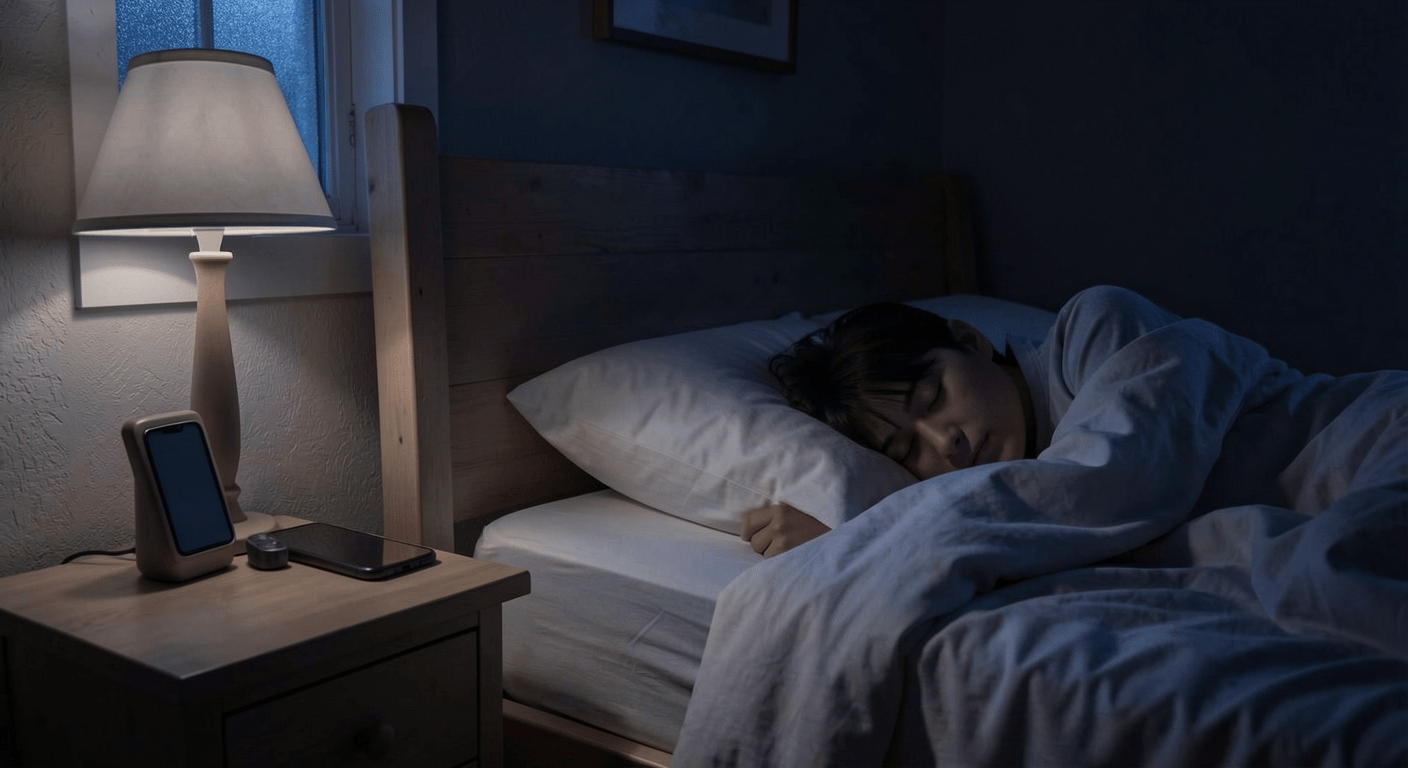
The foundational science is sound. Intrinsically photosensitive retinal ganglion cells (ipRGCs) in your eye contain melanopsin, a photopigment most sensitive to ~480nm light, right in the blue part of the spectrum. When these cells detect light, they signal the suprachiasmatic nucleus (your brain’s master clock) to suppress melatonin production. This is well-established circadian biology.
However, the leap from “blue light suppresses melatonin in a controlled lab setting” to “blue light from your phone is destroying your sleep” involves several assumptions that the evidence doesn’t fully support.
What Controlled Studies Actually Show
A 2022 systematic review and meta-analysis published in Sleep Medicine Reviews examined 29 experimental studies on the effects of evening screen use with and without blue-light filtering. The findings were surprising: blue-light filtering interventions produced, on average, only a 2-5 minute improvement in sleep onset latency compared to unfiltered screen use. The effect size for total sleep time was negligible.
A separate 2023 randomized controlled trial in JAMA Ophthalmology compared blue-blocking glasses to clear placebo glasses in 120 adults over four weeks. There was no significant difference in sleep quality, sleep duration, or next-day alertness between groups. The researchers concluded that “any effect of blue light on sleep in real-world conditions is likely small and overshadowed by behavioral factors.”
None of this means blue light doesn’t matter at all. It means that if you’re struggling with sleep and your phone is involved, blue light isn’t the primary mechanism. It’s a real variable, but a modest one. The bigger variables are what you’re doing on the phone, and what the phone is replacing.
The Real Sleep Killers: What’s Actually Happening When You Scroll at Night
Imagine two people. Person A lies in bed reading a Kindle Paperwhite (warm front light, no blue spectrum to speak of) for 45 minutes. Person B lies in bed scrolling TikTok for 45 minutes with Night Shift enabled. Who sleeps better?
Person A, almost every time, and it’s not because of the light. Here’s what’s actually happening:
1. Cognitive Arousal: Your Brain Can’t Wind Down While It’s Being Entertained
Sleep requires a shift from sympathetic (alert, aroused) to parasympathetic (calm, restorative) nervous system dominance. Algorithmic feeds, short-form video, and notification-checking are all designed to create intermittent spikes of arousal, dopamine hits, cortisol micro-bursts, orienting responses to novelty. Even with perfect amber light, your brain can’t transition to sleep mode while it’s processing a firehose of novel, emotionally charged content.
A 2024 study in the Journal of Sleep Research measured pre-sleep cognitive arousal in participants using social media versus reading a book in bed. The social media group showed significantly higher heart rate, higher electrodermal activity (sweat gland response), and longer sleep onset, even when both groups used identical screen brightness and color temperature. The content, not the wavelength, was driving the effect.
2. Time Displacement: The Hour You Didn’t Sleep
This is almost too obvious to state, but it’s the single largest effect: screen time displaces sleep time. A 2023 analysis of objectively measured smartphone use (via passive sensing, not self-report) in over 65,000 individuals found that each hour of in-bed phone use was associated with roughly 50 minutes of lost sleep. Not because the phone kept them awake after, because they stayed up later.
This effect dwarfed any measurable impact of blue light. The researchers estimated that time displacement accounted for approximately 85% of the total sleep deficit associated with bedtime phone use. If you take nothing else from this article, take this: the biggest thing your phone does to your sleep is keep you awake longer. Put it down earlier, and you’ve already solved most of the problem.
3. Psychological Engagement and Rumination
Your brain doesn’t instantly power down when you lock your phone. If your last 30 minutes of consciousness were spent reading stressful news, engaging in online arguments, comparing your life to curated highlight reels, or processing work emails, that mental state carries into the pre-sleep period. Psychologists call this “pre-sleep cognitive activity,” and it’s one of the strongest predictors of insomnia.
Content that triggers worry, social comparison, or problem-solving activates the default mode network and dorsolateral prefrontal cortex, brain regions that need to quiet down for sleep onset. It doesn’t matter whether the screen that delivered that content was blue, amber, or off.
Building an Evening Routine That Actually Protects Your Sleep
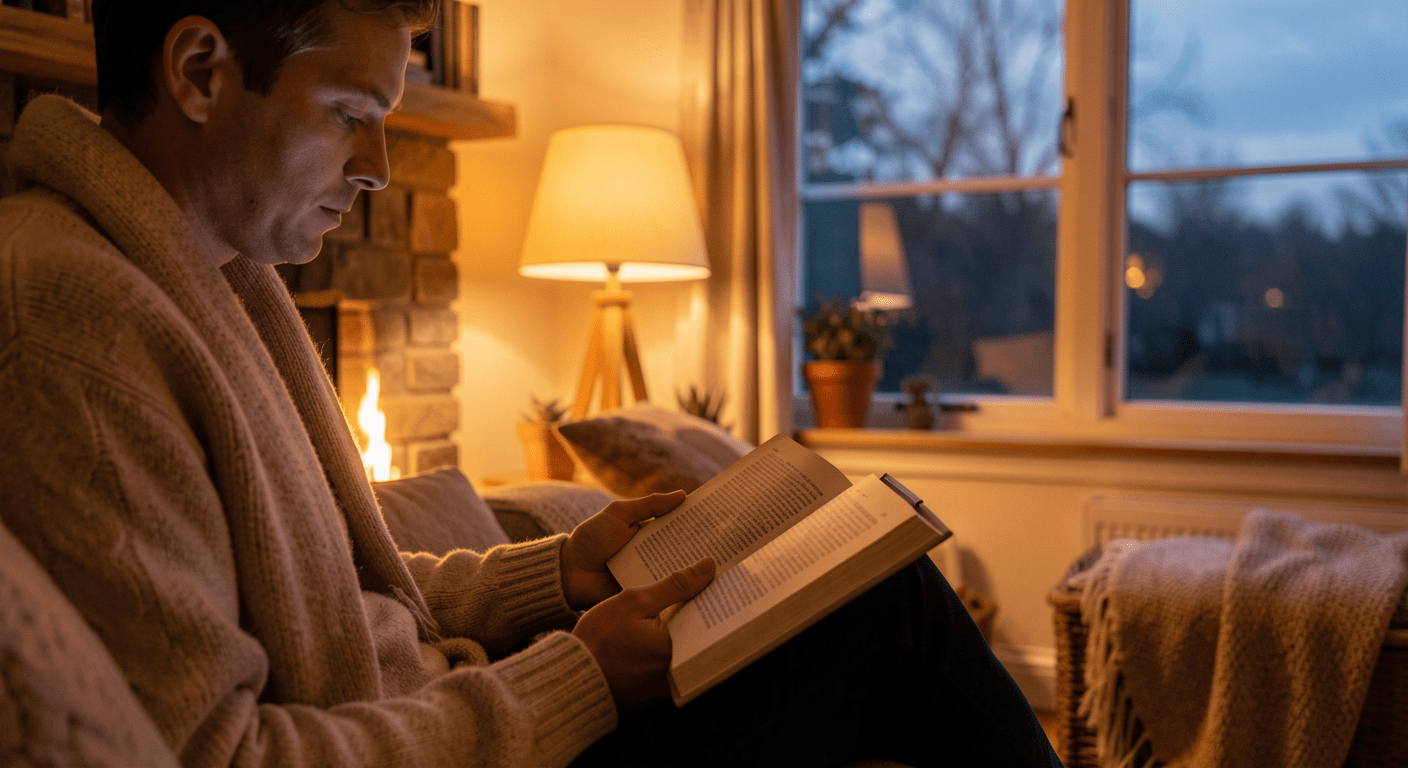
Given the evidence, a screen curfew that’s only about blue light misses the point. Here’s a protocol built around the real mechanisms.
The 90-Minute Screen Curfew
Set a hard cutoff: no screens, phone, tablet, laptop, TV, for the 90 minutes before your target sleep time. Ninety minutes isn’t arbitrary; it’s roughly one full sleep cycle and allows your brain to complete the transition from waking cognition to sleep readiness. If 90 minutes sounds impossible, start with 30 and add 10 minutes each week.
The Content Gradient
If you must use screens in the evening (and realistically, most of us will sometimes), apply a “content gradient”: as bedtime approaches, the type of content should become progressively less stimulating.
- 3+ hours before bed: Work, email, problem-solving, gaming, high-engagement content is fine
- 2 hours before bed: Transition to consumption mode, long-form reading, podcasts, passive video
- 1 hour before bed: No algorithmic feeds, no social media, no work. If you use a screen, it’s for something linear and calm: an e-book, a slow documentary, a meditation app
- 30 minutes before bed: No screens at all. Reading a physical book, journaling, gentle stretching, or conversation with a partner
Environment Design
Your bedroom should signal “sleep” to your brain, not “entertainment.” Some practical steps:
- No phone charger in the bedroom. Full stop. Buy a $15 alarm clock.
- If you must have your phone in the room (on-call work, family emergencies), place it face-down, on Do Not Disturb, at least six feet from your bed
- Keep the bedroom cool (65-68°F / 18-20°C), dark, and quiet, these are well-replicated sleep hygiene factors with much larger effect sizes than screen color temperature
- Use a warm, dim light source (below eye level) for pre-sleep reading, but don’t obsess over the exact wavelength
What About Night Shift and Blue-Blocking Glasses?
Use them if you like them. There’s no harm, and the placebo effect on sleep is real, if you believe they help, they likely do help, because sleep is highly sensitive to expectation and anxiety. But don’t let them become a justification for staying on your phone until midnight. A blue-blocked screen is still a screen, and the content that keeps you cognitively aroused at 11:57 PM doesn’t care what color temperature your display is using.
The Bottom Line
The blue light story was never wrong, it was just incomplete. Yes, light in the blue spectrum can phase-delay your circadian rhythm and suppress melatonin. But the magnitude of this effect from consumer devices, in real-world conditions, is modest. Far more impactful are the cognitive arousal from emotionally engaging content, the sheer hours of sleep displaced by entertainment, and the psychological carryover from whatever you consumed right before closing your eyes.
If you make exactly one change from this article, make it this: charge your phone outside your bedroom, starting tonight. Not because of blue light. Because if your phone isn’t in the room, you can’t scroll it, and if you can’t scroll it, you’ll sleep. The science on that part is unambiguous.