
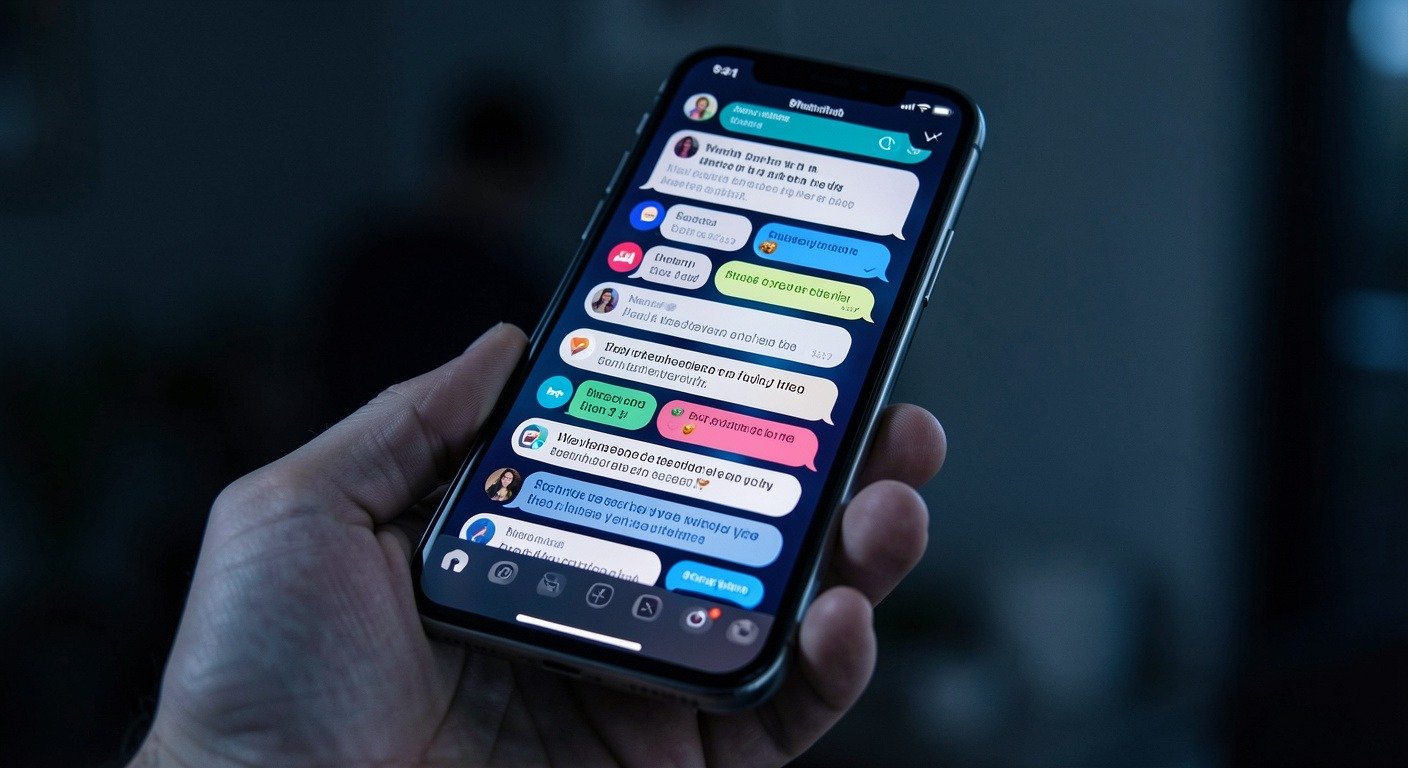
Your phone buzzed. You didn’t even think about it — your hand moved toward the screen before you finished reading this sentence. That automatic reach? It’s not weakness. It’s engineering. What you’re experiencing is phone notifications slot machine addiction — the same behavioral mechanism that keeps people pulling levers for hours.
Notifications are not neutral little nudges. They’re built on the same behavioral mechanism that keeps people pulling slot machine levers for hours: unpredictable, variable rewards. And once you understand how the system works, you can stop being the product and start being the one in control.
Quick Summary
- Your phone’s notification system exploits intermittent reinforcement — the most powerful behavioral conditioning schedule ever studied — which is the same mechanism behind slot machine addiction.
- Every notification ping triggers a dopamine spike in anticipation, not just reward — your brain learns to crave the check itself, not just what’s on the other side.
- Research shows it takes ~23 minutes to refocus after a single interruption, and the average person gets 46+ notifications a day — the math on lost attention is staggering.
- The fix isn’t going off-grid. Studies show batching notifications 3 times a day improves well-being more than eliminating them entirely.
Phone Notifications Slot Machine Addiction: The Brain Science Explained
In the 1950s, psychologist B.F. Skinner discovered something that would later become the backbone of modern app design. His research on schedules of reinforcement laid the foundation for understanding compulsive behavior. He found that when rewards arrive on an unpredictable, variable schedule — sometimes after 3 lever presses, sometimes after 17 — the behavior that produced them becomes nearly impossible to extinguish. Rats would press levers thousands of times for a single pellet, long after the rewards stopped coming.
This is called a variable ratio reinforcement schedule, and it is the most habit-forming reward pattern ever identified — the exact mechanism behind phone notifications slot machine addiction. Slot machines use it. Social media feeds use it. And your phone’s notification system uses it — relentlessly.
Every buzz, every ping, every red badge — they all exploit the same neurological loop that keeps gamblers at the machine.
Think about what happens when your phone pings. You don’t know what the notification is — a text from someone you love? A work emergency? A spam email? A like on a photo from three weeks ago? That uncertainty itself is the hook. Your brain releases dopamine in anticipation of finding out, not just when the news is good. Dr. Michael Rich of Harvard Medical School puts it bluntly: “Virtually all games and social media work on what’s called a variable ratio reinforcement schedule.”
Dr. Anna Lembke, a Stanford psychiatrist and author of Dopamine Nation, goes further — she describes the smartphone as the “modern-day hypodermic needle” for dopamine delivery. Each notification is a tiny, unpredictable hit that keeps you coming back.
The Real Cost of “Just One Quick Check”
You glance at a notification. It takes 3 seconds to dismiss. No big deal, right?
Wrong. Research from UC Irvine by Gloria Mark and colleagues found that after an interruption, it takes an average of 23 minutes and 15 seconds to fully return your focus to the original task. That’s not 23 minutes of lost time — that’s 23 minutes of reduced-quality work while your brain struggles to reload the mental context you lost.
Sophie Leroy, an organizational psychologist, named this phenomenon “attention residue” — part of your attention stays stuck on the previous task even after you’ve moved on. Each notification leaves a cognitive trace. Check your phone 5 times during a focused work session, and you’ve potentially spent the entire session operating at partial capacity.
Now do the math. The average adult receives roughly 46 push notifications per day, according to Business of Apps. For teenagers, a Common Sense Media study found the number climbs to 237 notifications daily — with some participants receiving up to 5,000 in a single 24-hour period. Even at the low end, that’s an interruption roughly every 20 minutes during waking hours.
You’re not distracted because you lack discipline. You’re distracted because the system was designed to make discipline nearly impossible.
Why “Just Turn Off All Notifications” Doesn’t Work
The intuitive solution seems obvious: kill every notification. Go nuclear. Silence everything.
But the research tells a more nuanced story. A 2019 study by Kostadin Kushlev and colleagues tested exactly this. They compared three groups: people who received notifications continuously (the default), people who received them batched into 3 daily deliveries (morning, afternoon, evening), and people who received zero notifications.
The results were surprising. The group with no notifications at all reported higher anxiety and FOMO — the silence created its own form of stress. But the batched group? They reported greater attentiveness, higher productivity, better mood, and a stronger sense of control over their phone. Batching, not eliminating, was the sweet spot.
A 2024 study published in Beyond the Buzz found a similar pattern — participants who batched notifications felt more in control: participants who disabled non-essential notifications for a week didn’t dramatically change how often they checked their phones, but they felt significantly less anxious. The benefit wasn’t about using the phone less — it was about removing dozens of micro-stressors throughout the day.
What Actually Works: A Practical Reset Plan
The goal isn’t to disappear from the internet. It’s to stop letting the internet pull your attention like a puppet string. Here’s what the evidence supports:
The Notification Reset
Step 1: The Audit (10 Minutes, One Time)
Go to your phone’s notification settings. Look at every app that has permission to interrupt you. Ask one question: “Has this app ever sent me a notification that genuinely improved my day?” If the answer is no — or “maybe once, months ago” — disable it. Most people find that 80% of their notifications come from apps they don’t consider valuable.
Step 2: Batch the Essentials (2 Minutes)
For the apps you keep — messaging, calendar, calls — use your phone’s Scheduled Summary feature (iOS) or notification channels (Android) to deliver them in 2-3 batches per day rather than as they arrive. Morning, lunch, and early evening is a common pattern that works well.
Step 3: Physical Distance During Focus (Free)
Research consistently shows that having your phone visible on your desk reduces cognitive performance — even when it’s silenced and face-down. Put it in another room during focused work. Out of sight genuinely helps reduce the unconscious pull to check.
Step 4: The 30-Second Pause Rule
When you feel the urge to check, pause for 30 seconds. Ask: “What am I hoping to find? What am I avoiding right now?” This small gap between impulse and action is where real choice lives. Most of the time, the urge passes on its own.
Step 5: Weekly Reset Check-In (5 Minutes, Sunday)
Once a week, glance at which apps sent you the most notifications. If an app crept back into heavy notification territory, ask whether it earned the privilege. Adjust as needed. This isn’t a one-time fix — it’s a system you maintain.

Common Mistakes That Make It Worse
Going nuclear. Turning off every notification often backfires — the silence creates anxiety, and people end up checking their phones more compulsively because they don’t know what they’re missing.
Relying on willpower alone. Your notifications are engineered by teams of behavioral psychologists and data scientists. Willpower is not a fair fight against a system designed to bypass it. Change the environment, not your character.
Shaming yourself. Beating yourself up every time you reflex-check your phone adds shame on top of the habit — and shame makes behavior change harder, not easier. You’re not broken. You’re responding exactly the way these systems were designed to make you respond.
Expecting a “detox” to fix everything. There is no peer-reviewed evidence that a 7-day dopamine fast “resets” your brain. What works is building sustainable, small changes — not dramatic short-term interventions that collapse the moment you return to normal life.
From Notifications to Freedom
Every notification is a small claim on your attention — and your attention is the most valuable resource you own. It’s how you do deep work. It’s how you stay present with the people you care about. It’s how you notice your own thoughts before the world fills the silence with pings.
The fix isn’t about willpower, and it isn’t about throwing your phone into the ocean. It’s about understanding the mechanism, removing the triggers you don’t need, and building a system around the ones you genuinely want to keep.
Start with the audit. Ten minutes. That’s the whole first step to breaking the phone notifications slot machine addiction cycle. You might be surprised how many apps you gave permission to interrupt your life without ever thinking about it.
- How to Make Your Phone Less Addictive — a practical guide to reclaiming your attention
- How to Stop Checking Your Phone Every Few Minutes — break the compulsive check habit
- The 7-Day Dopamine Detox Guide — reset your brain’s reward system in one week
Related: Read Your Phone Isn’t Stealing Your Time — It’s Shrinking Your Attention Span for the deeper cognitive cost of constant interruptions.
Disclaimer: This article is for informational purposes only and does not constitute medical advice. If you are experiencing significant distress related to technology use, please consult a qualified mental health professional.