Quick Summary
- Blue light from screens delays sleep by just 2 to 5 minutes under realistic conditions, not the hours that marketing suggests.
- The 2023 Cochrane review found blue-light-blocking glasses produced inconsistent and unreliable sleep improvements across 17 trials.
- Screen brightness, proximity to your face, and emotionally engaging content all matter more for sleep than blue light color alone.
- Simple free changes (dimming screens, holding devices farther away, 30-minute screen curfew) outperform any blue-light-blocking product on the market.
Quick Summary
- Blue light from screens delays sleep by just 2–5 minutes under realistic conditions, not the hours that marketing suggests.
- The 2023 Cochrane review found blue-light-blocking glasses produced inconsistent and unreliable sleep improvements across 17 trials.
- Screen brightness, proximity to your face, and emotionally engaging content all matter more for sleep than blue light color alone.
- Simple free changes (dimming screens, holding devices farther away, 30-minute screen curfew) outperform any blue-light-blocking product on the market.
Reading Time: 8 Minutes
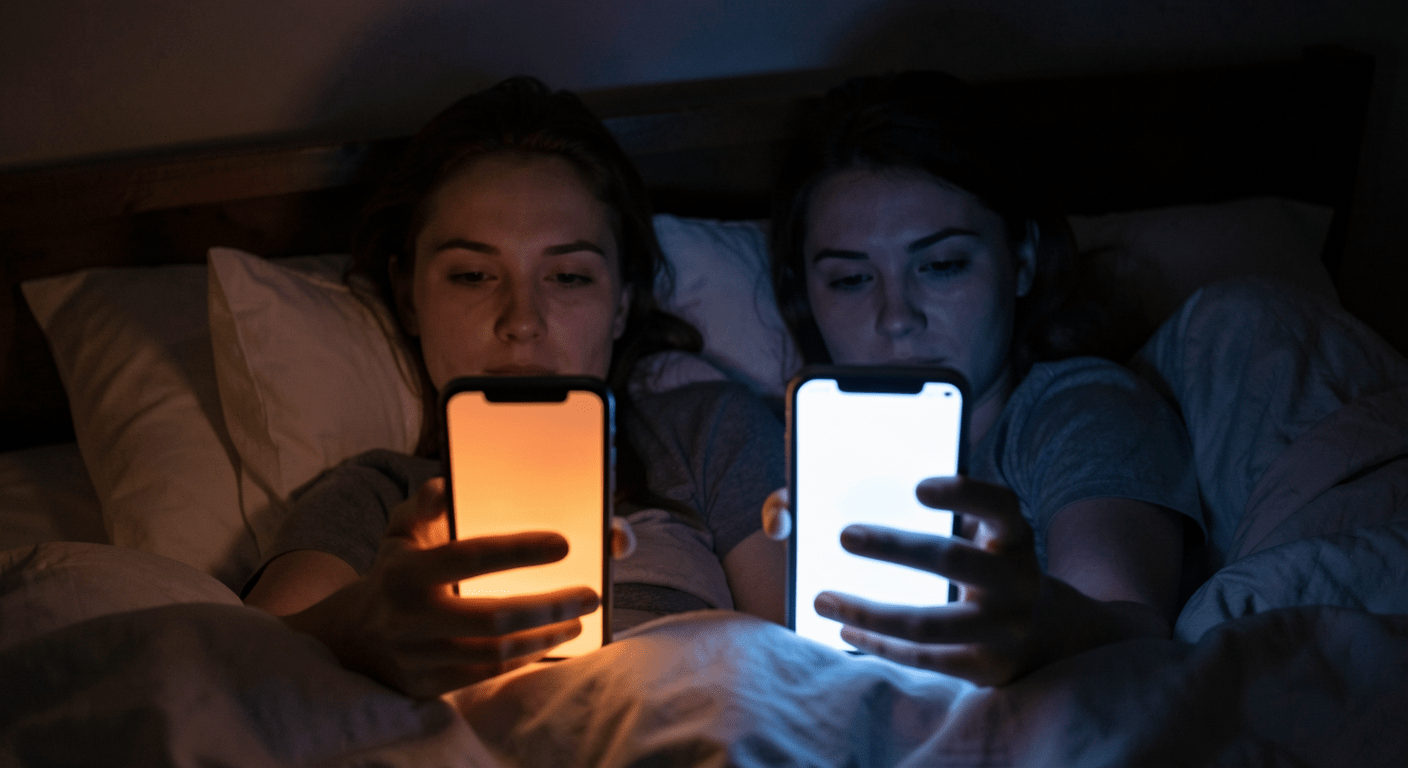
Walk into any pharmacy and you will find an aisle of products promising to save your sleep from blue light. Glasses for $20. Glasses for $80. Screen protectors, light bulbs, night-mode apps, and specialized lamps, all built on the same premise: blue light from your screens is destroying your melatonin, wrecking your circadian rhythm, and the only fix is to block it. The blue light sleep science tells a more complicated story.
The blue light industry is a multi-billion dollar global market. It grew from a real scientific finding, one that is genuine and well-replicated in controlled laboratory conditions. But somewhere between the lab and the marketing department, the evidence got stretched until it barely resembled what researchers actually found. This article separates what the science shows from what the industry sells. A closer look at the blue light sleep science reveals findings that most product marketing conveniently ignores.
What Blue Light Sleep Science Actually Shows
Understanding what the most rigorous blue light sleep study evidence actually shows requires looking past the marketing claims. And while laboratory controlled studies that expose participants to intense, sustained blue light do show measurable melatonin suppression, the conditions in those studies rarely match how people actually use screens. A phone held at normal distance produces far less light intensity than the experimental setups used in early laboratory research.
When researchers run controlled trials under realistic conditions, dim room, typical phone brightness, normal viewing distance, the effect of blue light on sleep shrinks considerably. Individual controlled studies suggest that blue light exposure from screens delays sleep onset by roughly two to five minutes compared to dim light conditions. Total sleep time? Negligible difference once participants actually fall asleep.
This is where the blue light melatonin myth starts to unravel. It is not that blue light has no effect. It does. The effect is just much smaller than the marketing implies. Two to five minutes of additional time to fall asleep is a real measurable outcome. It is also less than the variability most people experience from having a single cup of coffee too late in the day, from a stressful conversation, or from a room that is slightly too warm.
The Cochrane Review That Changed the Conversation
In 2023, a team of researchers published a Cochrane systematic review that tested what actually happens when people wear blue-light-blocking glasses before bed. This is the gold standard in evidence synthesis, analyzing 17 randomized controlled trials. The review found inconsistent results across studies.
The result: three of the six studies that measured sleep quality found some improvement with blue-light filtering lenses. The other three found no significant difference. The Cochrane review’s conclusion was clear: the evidence is too inconsistent to recommend blue-light-blocking glasses for improving sleep. The glasses blocked blue light exactly as designed. They just did not reliably improve sleep in any measurable way compared to standard lenses.
This finding has been corroborated by other work. The 2017 systematic review by Lawrenson and colleagues, published in Ophthalmic and Physiological Optics, also found a lack of high-quality evidence to support blue-light-blocking lenses for sleep improvement in the general population. The 2023 Cochrane review, the gold standard in evidence synthesis, reached the same conclusion: the clinical benefit of blue-light blocking for sleep is, at best, small and inconsistent across studies. For most people, investing in expensive blue-blocking products is unlikely to produce meaningful sleep improvements on its own.
What Actually Disrupts Sleep: Brightness, Proximity, and Content
If blue light is not the main culprit, then what is? The question does blue light affect sleep has a nuanced answer: yes, but brightness matters more than color, and content matters more than both.
Screen brightness. The total amount of light hitting your retina, regardless of its color, is the strongest light-based signal to your circadian system. A bright warm screen suppresses melatonin more than a dim blue screen. This is why simply turning your phone brightness all the way down in the evening may do more for your sleep than any blue-light-filtering app.
Proximity to your face. Light intensity falls off with the square of distance. A phone held six inches from your eyes delivers roughly nine times more light to your retina than the same phone held eighteen inches away. The closer your screen, the stronger the biological signal, regardless of color temperature.
Content engagement. This is the factor that most sleep hygiene advice overlooks. Your brain responds to what is on the screen, not just the light it emits. A stressful work email, an anxiety-provoking news headline, an exciting game, or an emotionally charged social media thread all trigger cognitive and emotional arousal. Your nervous system shifts into a state of alertness that is incompatible with sleep. You could wear the most expensive blue-blocking glasses on the market and still lie awake for an hour after reading something that made you angry or anxious.
Research published in the Journal of Sleep Research and similar journals suggests that pre-sleep cognitive arousal, racing thoughts, worry, mental engagement with content, may be a more important factor for sleep quality than screen light wavelength alone. Your phone is a content delivery device first and a light source second.
What to Actually Do About It
The evidence points away from expensive products and toward simple environmental changes. None of these recommendations require buying anything. All of them are supported by the broader sleep science literature, even if the blue-light-specific evidence is weaker than commonly believed.
The 5-Step Blue Light and Sleep Reset
Step 1: Dim Everything (Immediate)
Turn your screen brightness to its lowest comfortable level in the evening. Not just your phone, laptops, tablets, televisions, and ambient room lights. Total light exposure matters more than spectral composition. If you do nothing else, do this.
Step 2: Enable Warm Light Mode (2 Minutes)
Every modern phone and computer has a built-in warm light or night mode setting. Turn it on and set it to activate automatically at sunset. Does warm light mode single-handedly fix your sleep? No. But it reduces the blue component of your total light exposure, and there is no meaningful downside to using it.
Step 3: Increase Screen Distance (Immediate)
Hold your phone farther from your face in the evening. Propping it up on a stand or nightstand instead of holding it six inches from your eyes cuts retinal light exposure significantly, by roughly four to nine times depending on distance. This applies to any screen and any color of light.
Step 4: Set a Screen Curfew (30-60 Minutes Before Bed)
The most effective intervention in the literature is also the simplest: stop using screens entirely for the last 30 to 60 minutes before you intend to sleep. This removes light exposure, cognitive engagement, and the behavioral conditioning that associates your bed with wakefulness. Replace screen time with a book, a conversation, or a simple wind-down routine.
Step 5: Charge Your Phone Outside the Bedroom (Overnight)
If the phone is not in the room, it cannot disrupt your sleep, not with light, not with notifications, not with the temptation to check it at 2 AM. Buy a basic alarm clock if you use your phone as one. This single change consistently produces the largest improvements in sleep quality across multiple intervention studies.
Common Mistakes People Make About Blue Light and Sleep
The blue light conversation attracts strong opinions, and many of the most widely shared claims do not hold up to scrutiny. Here are the most common errors people make when thinking about blue light and their sleep.
Common Mistakes That Make It Worse
Mistake 1: Buying expensive blue-blocking glasses and changing nothing else. The evidence for blue-blocking glasses improving sleep in the general population is weak. Spending $80 on glasses while continuing to scroll stressful content in a bright room at midnight is unlikely to help.
Mistake 2: Trusting night mode to fix everything. Night mode reduces blue light, which is fine. But it does not reduce total brightness, cognitive engagement, or the behavioral conditioning that keeps your brain alert. It is a tool in the toolbox, not a solution by itself.
Mistake 3: Assuming blue light is the only thing keeping you awake. For most people, the content on the screen matters more than the color of the light. If you are reading a calm book on a standard-brightness screen, your sleep will likely be fine. If you are watching emotionally charged content on a warm-dim screen, your brain may still stay alert.
Mistake 4: Over-focusing on light while ignoring everything else. Caffeine timing, alcohol consumption, inconsistent bedtimes, room temperature, noise, stress, and exercise patterns all affect sleep more than blue light does. Fixing screen light while ignoring these factors is like rearranging deck chairs.
Your Turn: Sit With This
Think about your last three nights. What was on your screen in the hour before you tried to sleep? Was it work, news, social media, or something calming? Does the content you consume before bed feel like rest, or like one more thing your brain has to process before it can let go?
The Bottom Line
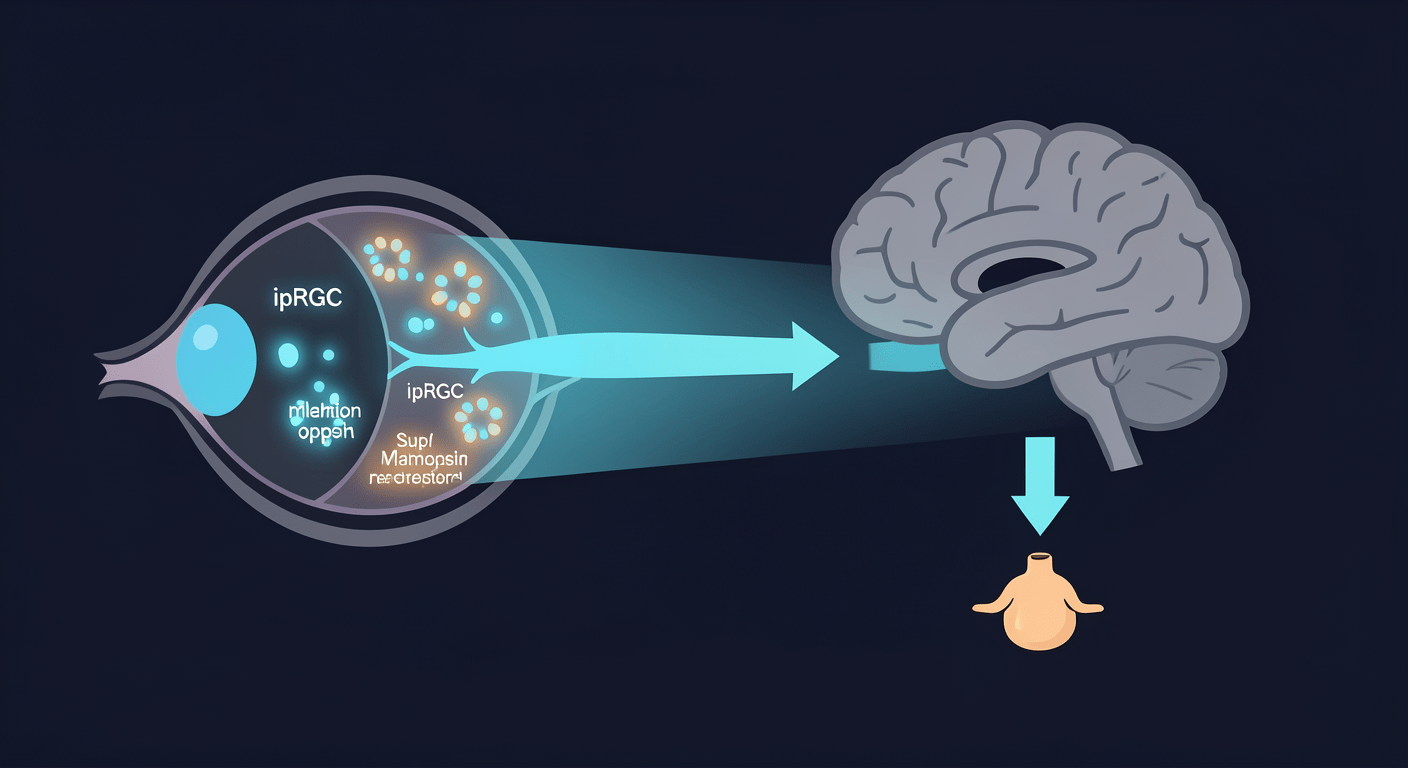
Blue light is real. Melanopsin is real. The circadian biology is real. But the magnitude of blue light’s effect on sleep in everyday screen use has been significantly overstated, in large part because a multi-billion dollar industry has a strong incentive to keep it that way.
The best available blue light sleep science suggests that dimming your screen, holding it farther away, choosing calming content, and setting a screen-free buffer before bed will do more for your sleep than any blue-light-blocking product on the market. These changes cost nothing, require no special equipment, and are supported by a broader and more consistent body of research than blue-light interventions alone.
Blue light matters. But as the blue light sleep science makes clear, it matters much less than you have been told.
Keep Going: Related Guides
- Screen Time and Sleep: The Blue Light Myth vs. What Actually Matters, a deeper look at how total screen habits, not just blue light, shape your sleep quality.
- Phone Addiction and Sleep: Why Scrolling Before Bed Is Destroying Your Rest, the specific behavioral patterns that keep you scrolling at night and how to break them.
- Dopamine Fasting 2.0: What the Science Actually Says in 2026, the updated evidence on dopamine regulation and digital habits.
Related: Screen Time and Sleep covers the behavioral side of bedtime screen use. Phone Addiction and Sleep explains why stopping is harder than it sounds and what a 30-minute screen curfew actually looks like in practice.