Reading Time: 8 Minutes
You check your phone 144 times a day. Most of those checks aren’t intentional, they’re automatic. Your thumb swipes before your brain even registers what it’s doing.
This isn’t a character flaw. It’s neurochemistry.
Quick Summary
- A 72-hour dopamine fast from your phone can reset your brain’s reward sensitivity, reducing the compulsive need to check notifications and scroll
- Dopamine is a motivation and anticipation molecule, not just a pleasure chemical, your phone hijacks this system through unpredictable variable rewards
- The first 24 hours are the hardest as withdrawal-like symptoms peak, but day two brings noticeable mental clarity and reduced anxiety
- A structured re-entry plan is essential, without it, most people return to baseline phone habits within 48 hours of completing the fast
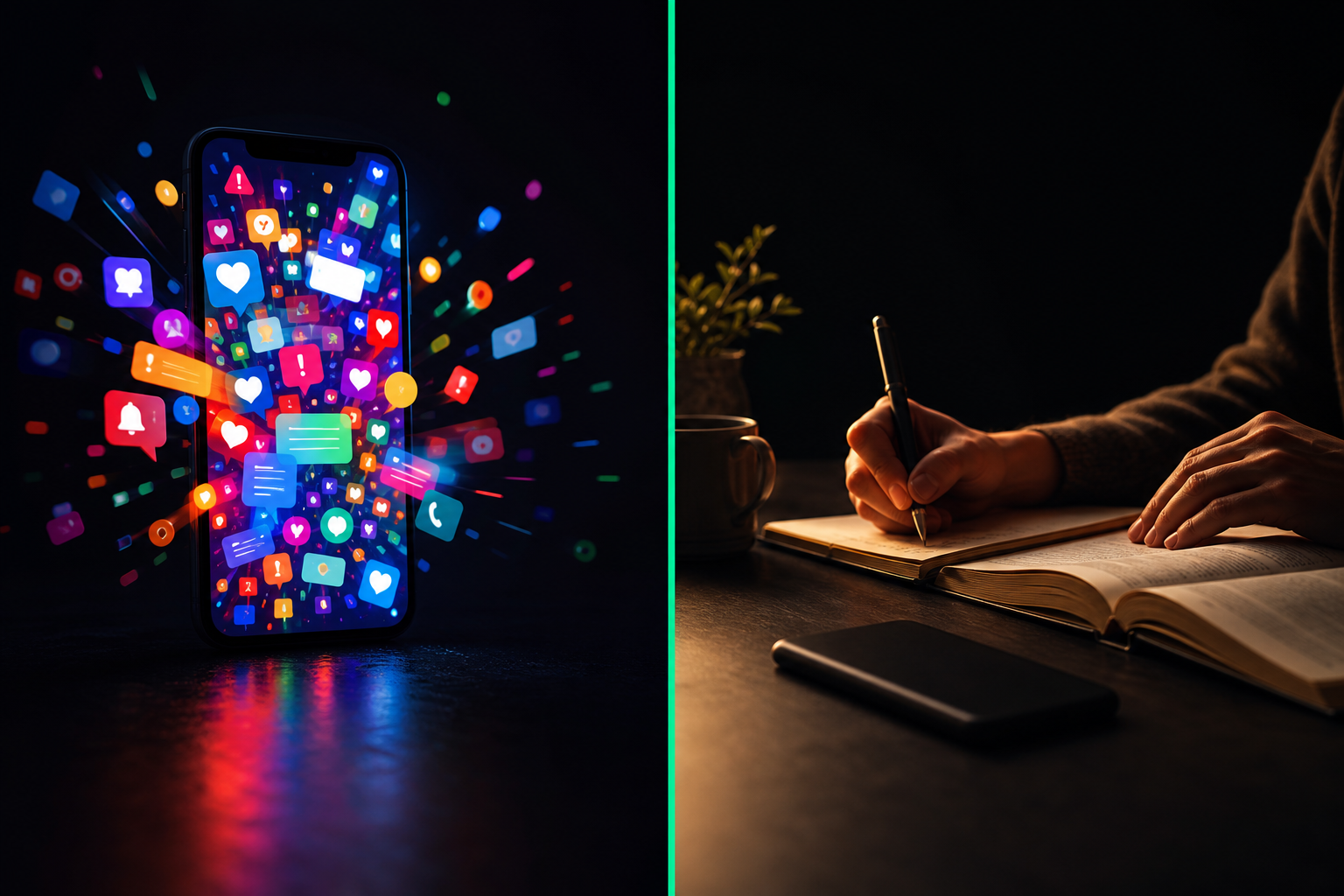
Every swipe, every notification, every new post in your feed triggers a tiny pulse of dopamine, the same neurotransmitter involved in craving, motivation, and addiction. Platforms are engineered to exploit this. Infinite scroll removes stopping cues. Pull-to-refresh mimics a slot machine lever. Variable rewards keep you hunting for the next hit.
The result? A global population spending three to four hours a day scrolling through content they won’t remember tomorrow.
But here’s what the research actually shows when you step away, even for just 72 hours.
What Dopamine-Scrolling Does to Your Brain
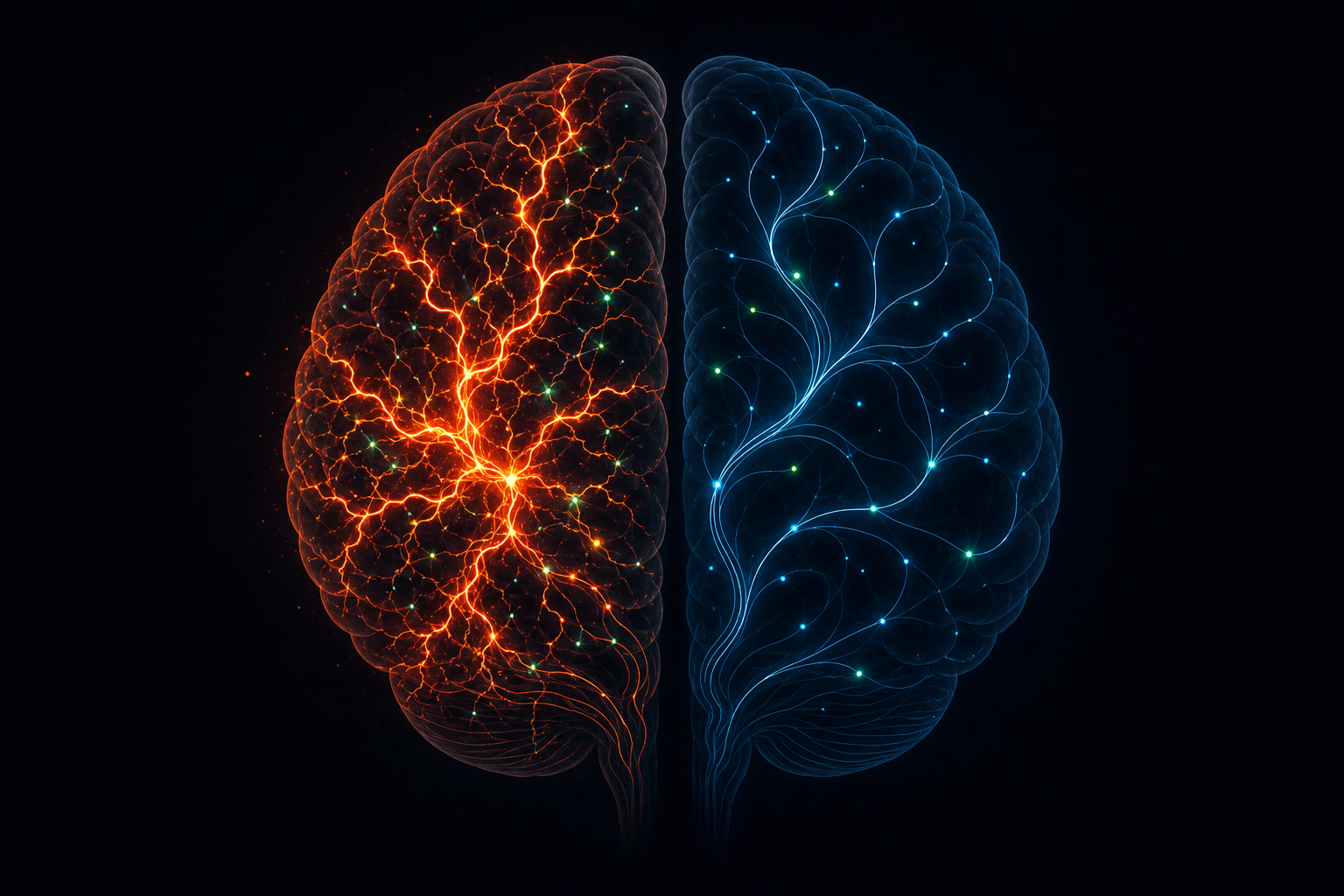
In 2025, researchers Sharpe and Spooner published a paper in Perspectives in Public Health that gave this behavior a clinical name: dopamine-scrolling. It’s distinct from doom-scrolling (which fixates on negative content) and from full-blown internet addiction disorder. Instead, it operates through reward mechanisms and variable reinforcement schedules, the same psychological architecture that makes gambling compelling.
The mechanics are deliberate. Social media platforms use “dark patterns”: infinite scrolling, algorithmic feed curation, auto-play, and social validation hooks (likes, comments, notifications). Each of these features bypasses your brain’s natural stopping signals.
Over time, this can produce a tolerance effect. You need more stimulation, faster cuts, louder content, shorter videos, to feel the same level of engagement. Your baseline dopamine signaling gets blunted. Ordinary activities that don’t deliver rapid-fire novelty start to feel dull by comparison.
A 2025 meta-analysis of 109 studies found that problematic smartphone use affects 37.1% of the global population. That’s more than one in three people. And the trend is rising.
The 72-Hour Reset: What the Science Says
Dr. Anna Lembke, an addiction expert at Stanford Medicine, published a framework in April 2025 for what she calls a “digital fast”, 24 hours completely phone-free. The logic is straightforward: interrupt the dopamine reward cycle long enough for your brain to begin recalibrating.
But Lembke is honest about the timeline. A single day is a diagnostic tool, not a cure. “A full reset,” she writes, “takes three to four weeks.”
So why focus on 72 hours?
Because research suggests the first three days represent a critical transition window. A 2025 digital detox scoping review published in Cureus analyzed 14 studies and found that even short-term abstinence from smartphones reduced depressive symptoms significantly, without increasing negative mood or anxiety. In fact, voluntary abstinence was associated with improvements in negative affect states.
Another 2025 study in BMC Medicine found that just three weeks of reducing smartphone screen time produced small-to-medium effect sizes on depressive symptoms, stress levels, sleep quality, and overall well-being.
The pattern is consistent: the people who benefit most are the ones with the highest baseline usage and the most severe symptoms. If you’re the person checking your phone 150+ times a day, a detox period may affect you more noticeably than someone who already has healthy boundaries.
What Withdrawal Actually Feels Like
If you’ve ever tried to go phone-free for even a few hours, you know the sensation. Restlessness. A phantom buzz in your pocket. The reflexive reach for a device that isn’t there.
Lembke is blunt about this: “Just know: you’ll likely feel worse before you feel better. That’s withdrawal.”
Common symptoms during the first 24-48 hours include anxiety, irritability, insomnia, dysphoria (a general sense of unease), and intense craving. These are time-limited. With continued abstinence, they lessen or disappear entirely, typically within three to seven days.
The craving itself is revealing. It tells you how deeply the habit is wired into your daily rhythms. Pay attention to when it hits hardest: first thing in the morning? During moments of boredom? When you’re alone? These are the exact moments your brain has learned to reach for a dopamine hit instead of sitting with discomfort.

Reintegrating Your Phone Without Falling Back
The most dangerous part of any detox isn’t the abstinence. It’s the return.
Lembke’s protocol includes a critical step: before you open any device after your fast, decide exactly how you’ll use it. Write it down. Stick to it. This transforms unconscious habit into deliberate choice.
Practical strategies that research supports:
Switch to grayscale. Removing color from your screen reduces the visual reward that bright, saturated interfaces provide. It’s a simple change that makes scrolling less neurologically compelling.
Delete the most triggering apps. You don’t need to delete everything. Identify the one or two platforms that drive the most mindless scrolling, typically TikTok, Instagram Reels, or YouTube Shorts, and remove them. You can still access them through a browser if you genuinely need to, but the friction of logging in each time disrupts the automatic loop.
Disable all non-essential notifications. Every buzz is a micro-interruption designed to pull you back into the app. Turn off everything except calls and messages from actual humans.
Create physical distance. A 2025 study on mindfulness and problematic smartphone use found that simply placing your phone out of reach, in another room, in a drawer, face-down across the desk, significantly reduces automatic checking behavior.
Replace the habit, don’t just remove it. Lembke suggests planning real-world activities, especially those involving human interaction. When the craving hits, she recommends physical resets: a cold shower, 20 sit-ups, cleaning a closet. The goal isn’t distraction, it’s teaching your brain that discomfort can be tolerated without reaching for a screen.
What You’ll Actually Notice After 72 Hours
Most people report a handful of consistent changes after a multi-day phone detox:
Time slows down. Without constant micro-stimulation, hours feel longer. This can be unsettling at first, boredom feels foreign, but it’s actually your attention span beginning to recover.
Sleep improves. Blue light exposure is one factor, but the larger issue is cognitive arousal. When you stop scrolling before bed, your brain has time to wind down naturally. Research consistently links reduced evening screen time to better sleep quality and faster sleep onset.
Your focus returns, slowly. The constant task-switching that smartphones impose (the average person switches tasks every 40 seconds when working near a phone) fragments attention. After 72 hours without this interference, many people report being able to read for longer stretches, follow conversations more deeply, and complete tasks without the urge to check something.
Mood stabilizes. This one is nuanced. The first 48 hours may feel worse. But by day three, the research suggests most people experience a lift, less irritability, fewer anxiety spirals, a sense of calm that wasn’t there before.
A Note on Realistic Expectations
This isn’t a miracle cure. A 72-hour detox won’t permanently rewire years of conditioned scrolling behavior. Lembke’s research indicates that full neurological recalibration takes three to four weeks of sustained change.
Think of it instead as a diagnostic tool and a reset point. It shows you how deep the habit runs. It gives you a clean baseline to build healthier patterns from. And it proves something important: you can function, actually function, without a phone in your hand.
The phone isn’t the enemy. The design choices that make it compulsive are. Understanding that distinction is the first step toward using technology on your terms, not the platform’s.
FAQ
Is phone addiction a real medical diagnosis?
Internet addiction disorder is not formally listed in the DSM-5 (the diagnostic manual used by mental health professionals). However, “gaming disorder” is recognized by the WHO, and problematic smartphone use is an active area of clinical research. Whether or not it meets formal diagnostic criteria, the behavioral patterns, craving, tolerance, withdrawal, impaired control, mirror those of recognized addictive disorders.
Will a 72-hour detox cure my phone addiction?
No single detox period will permanently change deeply conditioned habits. Research suggests sustained improvement requires consistent boundary-setting over weeks and months, not days. A short detox is most useful as a diagnostic tool and a starting point for building healthier routines.
What if I can’t go 72 hours without my phone for work reasons?
Modify the protocol. Designate specific work-only use windows. Keep the phone in grayscale. Remove social media apps and only use essential communication tools. The goal is breaking the dopamine-scrolling loop, not abandoning all digital communication.
Medical Disclaimer: This article is for informational and educational purposes only and does not constitute medical advice. The content is not intended to diagnose, treat, cure, or prevent any condition. If you are experiencing significant distress, impaired daily functioning, or symptoms of anxiety or depression related to technology use, please consult a licensed mental health professional. Do not disregard professional medical advice or delay seeking it because of something you have read here.
Quick Summary
- Your digital habits are not a character flaw, they are shaped by environment and triggers.
- Small, practical changes to your settings and routines are more effective than willpower alone.
- You can start resetting your attention today with one simple boundary.
Simple Reset: Start Today
- Identify one trigger, the app, time, or feeling that starts the scroll.
- Add one small friction point, move the app, set a limit, or change one notification.
- Replace the habit with one 5-minute alternative: walk, breathe, write, or stretch.
Common Mistakes
- Trying to quit everything cold turkey on day one
- Not changing the environment that triggers the behavior
- Replacing scrolling with another cheap dopamine source
- Expecting perfection instead of progress
Related Reset Guides
The 7-Day Dopamine Detox Guide
What Is Digital Addiction?
Why You Cannot Focus Anymore
About the Author
Joshua Linn is the creator of DoubleDetoxDop. This site explains digital habits, dopamine detox, and focus rebuilding in simple language for modern life. No shame. No extreme rules. Just practical resets that actually work.
Found a factual issue? Contact us, we care about accurate, responsible wording.