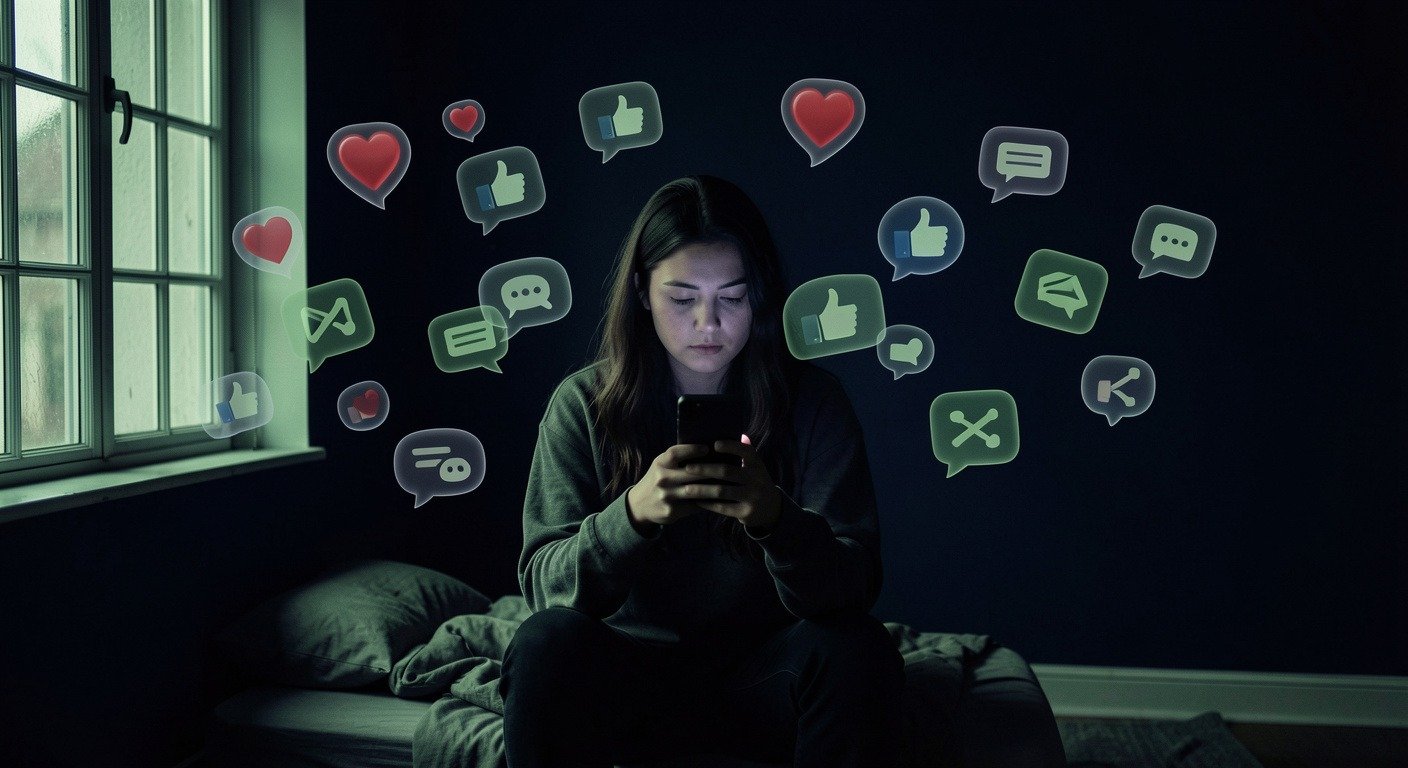
You have more followers than your parents had neighbors. You can video-call someone on another continent in seconds. Your phone buzzes fifty times a day with messages, comments, likes, and mentions. And yet, if you are honest with yourself, you feel lonelier than you did five years ago.
This is not a contradiction. It is a design feature.
Social media platforms did not set out to make you lonely, but the way they are built — optimized for passive consumption, engineered for maximum time-on-screen, rewarding shallow interactions over deep ones — produces loneliness as a byproduct. This article explains the research behind the loneliness paradox, how these platforms displace real connection, and what actually rebuilds it.
Quick Summary
- A cross-sectional study in PMC found that more time on social media is directly associated with higher levels of loneliness, especially for people who use it as a coping mechanism.
- The World Health Organization now classifies loneliness as a global health priority, linking it to increased risk of stroke (30%), heart disease (29%), and premature death.
- Passive consumption, not active connection, is the problem. Most users spend over 80% of their social media time scrolling without engaging. This mimics social contact without providing any of its benefits.
The Displacement Effect: What Social Media Replaces
There are 24 hours in a day. Every hour you spend passively scrolling through other people’s lives is an hour you are not spending in face-to-face interaction with your own. This is called the displacement effect, and it is the core mechanism behind the loneliness paradox.
Media Dependency Theory, updated in a 2025 review by Premier Science, explains that people increasingly rely on media platforms for social contact. The platforms are designed to feel like connection — a like feels like acknowledgment, a comment feels like conversation. But the research shows that these digital substitutes do not satisfy the biological human need for in-person social interaction.
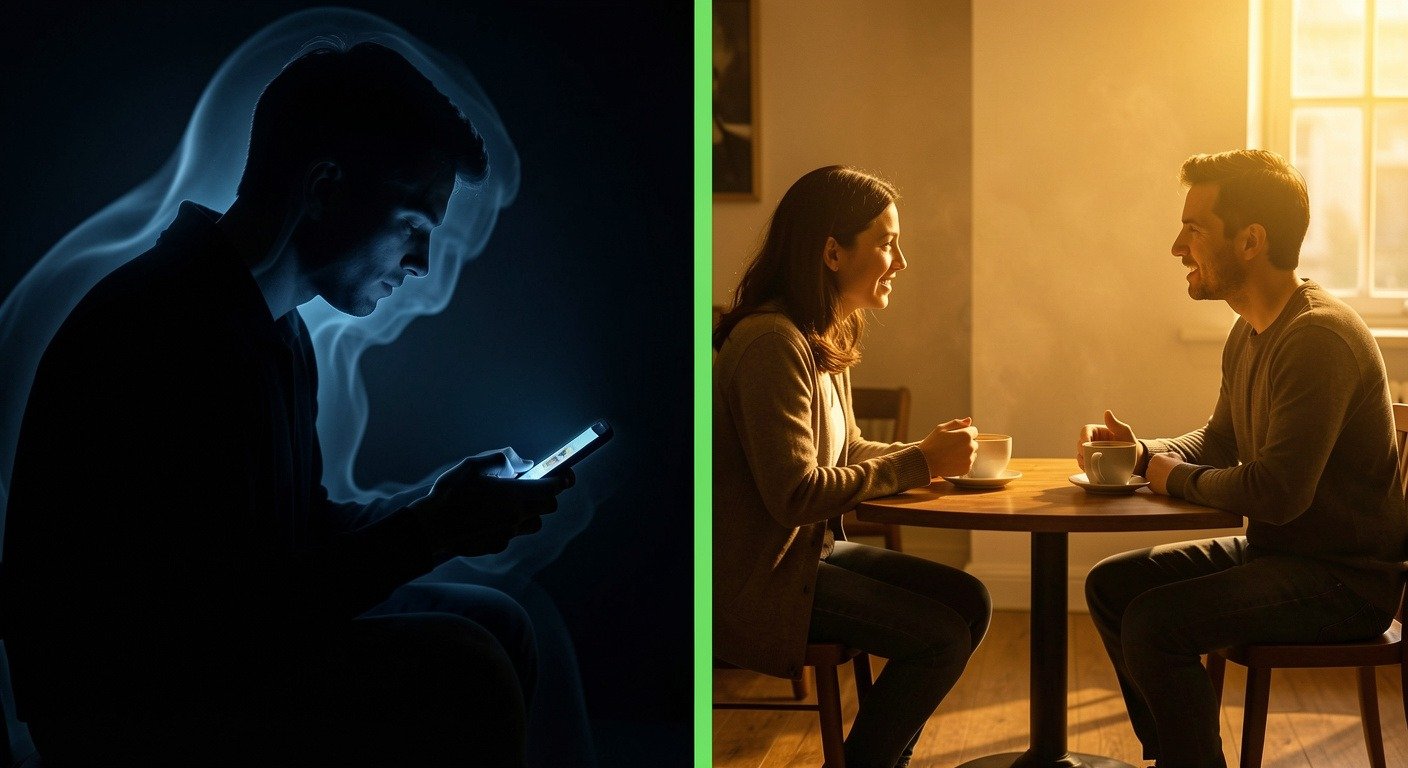
The displacement math is brutal. The average person spends two and a half hours on social media daily. In the 1970s, before smartphones, the average person spent about two hours a day in face-to-face social interaction outside of work and family. Today, that number has dropped by roughly 40 percent. The time did not disappear. It moved to screens.
The Health Consequences Are Real
In June 2025, the World Health Organization released a landmark report on social connection and health. The findings were stark. Loneliness and social isolation increase the risk of stroke by 30 percent, heart disease by 29 percent, and are linked to higher rates of diabetes, cognitive decline, and premature death. The WHO now treats loneliness as a public health priority on par with smoking and obesity.
For adolescents, the picture is even more concerning. A BCPH Review study found that both social media use and social isolation were significantly associated with depression outcomes in teenagers. Worse, the two factors interact. Heavy social media use combined with social isolation creates a feedback loop: the teenager feels lonely, scrolls social media for connection, finds only passive consumption, feels lonelier, scrolls more.
The cross-sectional study in PMC (9817115) identified a critical distinction. People who used social media actively — messaging friends, commenting meaningfully, creating content — did not show the same loneliness association. The harm was concentrated in passive use: scrolling without engaging, consuming without contributing, watching others live instead of living yourself.
Active vs. Passive: The Difference That Matters
Research consistently shows that passive social media consumption is far more harmful to wellbeing than active use. The problem is that platforms are structurally optimized for passive consumption. The infinite scroll, the algorithmically curated feed, the autoplay video — every design element encourages you to keep consuming, not to stop and connect.
Most users spend over 80 percent of their social media time passively. They scroll through photos of friends they have not spoken to in months. They watch strangers’ lives unfold in 60-second clips. They read comment sections without joining the conversation. The brain registers this as social activity — faces, names, emotional content — but receives none of the neurochemical benefits of actual social interaction.
It is like eating a picture of food. It looks like nourishment, but your body knows the difference.
How to Rebuild Real Connection
Reversing the loneliness paradox does not require deleting every app. It requires changing the ratio. Here is a practical plan based on the research:
- Audit your social media time. For one day, log every social media session. Mark each as passive (scrolling without engaging) or active (messaging, commenting, creating). Most people are surprised by how lopsided the ratio is.
- Switch to active-only for one week. You can still open the apps, but you must engage. Comment on a friend’s post. Send a message that starts a real conversation. Share something you created. If you catch yourself passively scrolling, close the app.
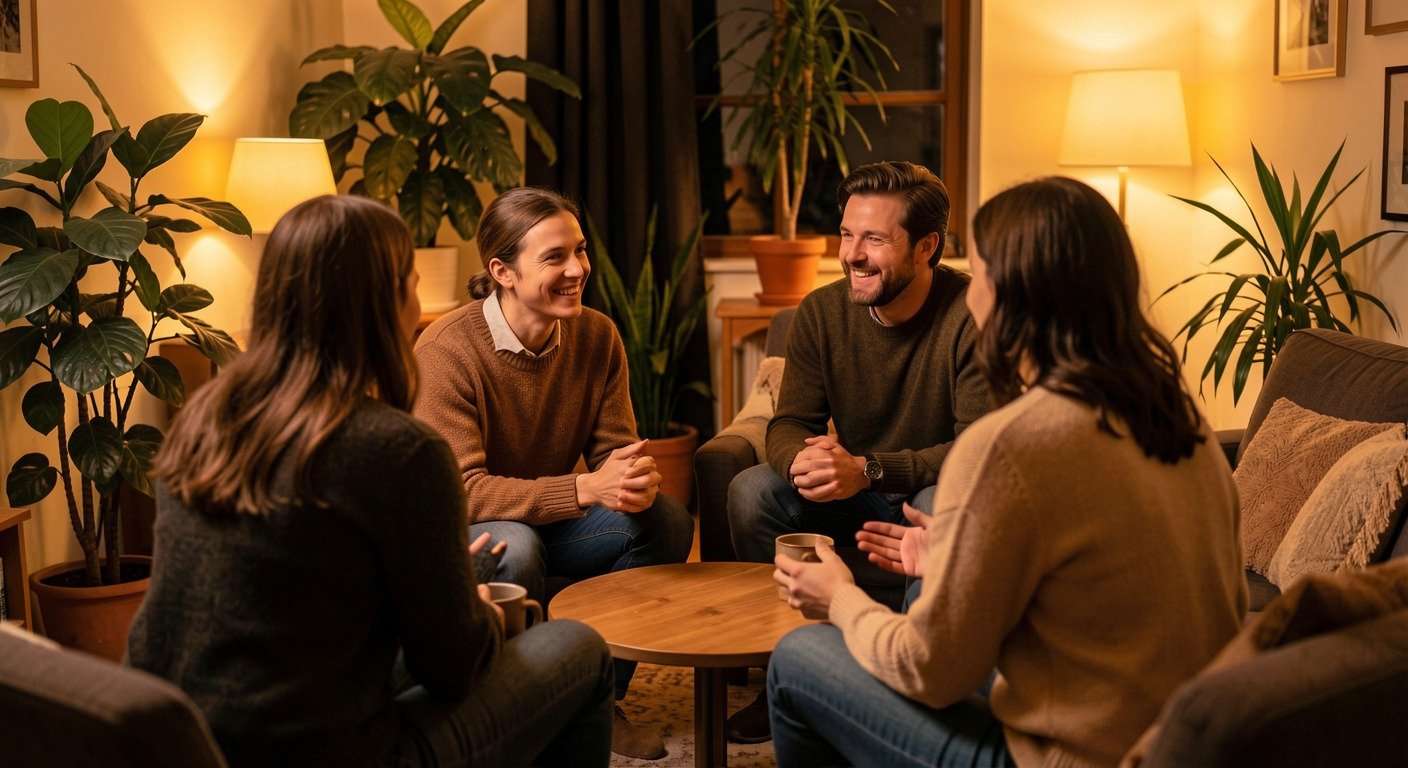
- Schedule one in-person social activity per week. Research on loneliness interventions consistently finds that structured in-person activities — group exercise, volunteering, shared meals, book clubs, hiking groups — are the most effective intervention. The activity itself matters less than the consistent, phone-free presence of other people.
- Replace one scrolling session per day with a micro-connection. Call a friend for five minutes instead of scrolling for twenty. Say hello to a neighbor. Make eye contact and smile at the person making your coffee. These micro-connections add up.
Common Mistakes
Mistake 1: Thinking you can scroll your way out of loneliness. If you are feeling isolated, opening social media feels like the natural response. It is the worst response. The research is clear: passive scrolling increases loneliness. Text a real person instead. Call someone. Walk outside and be around people, even if you do not talk to them.
Mistake 2: Treating all social media use as equal. Messaging a close friend on WhatsApp is not the same as doomscrolling a stranger’s feed for forty minutes. Do not lump all screen time together. The active versus passive distinction is the one that matters for loneliness.
Mistake 3: Waiting to feel motivated before reconnecting. Loneliness makes you withdraw. Withdrawal makes you lonelier. The loop will not break itself. Schedule the social activity first. The motivation will follow the action, not the other way around.
Final Thought
Social media promised connection. What it delivered was a simulation of connection that feels close enough to the real thing to keep you coming back, but not close enough to satisfy the need. You have been consuming social content the way you consume fast food: filling, momentarily satisfying, and nutritionally empty.
The cure is not willpower. It is not a better app. It is not waiting for the platforms to change their design. The cure is remembering that you are a social mammal, not a content consumer, and acting accordingly.
Put the phone down. Go be around people. It sounds too simple. But the WHO, the research, and every human who has ever tried it will tell you the same thing: it works.
Wellness Disclaimer: This article is for informational and educational purposes only. It is not a substitute for professional medical advice, diagnosis, or treatment. If you are experiencing chronic loneliness, depression, or mental health concerns, please consult a qualified healthcare provider.