Quick Summary
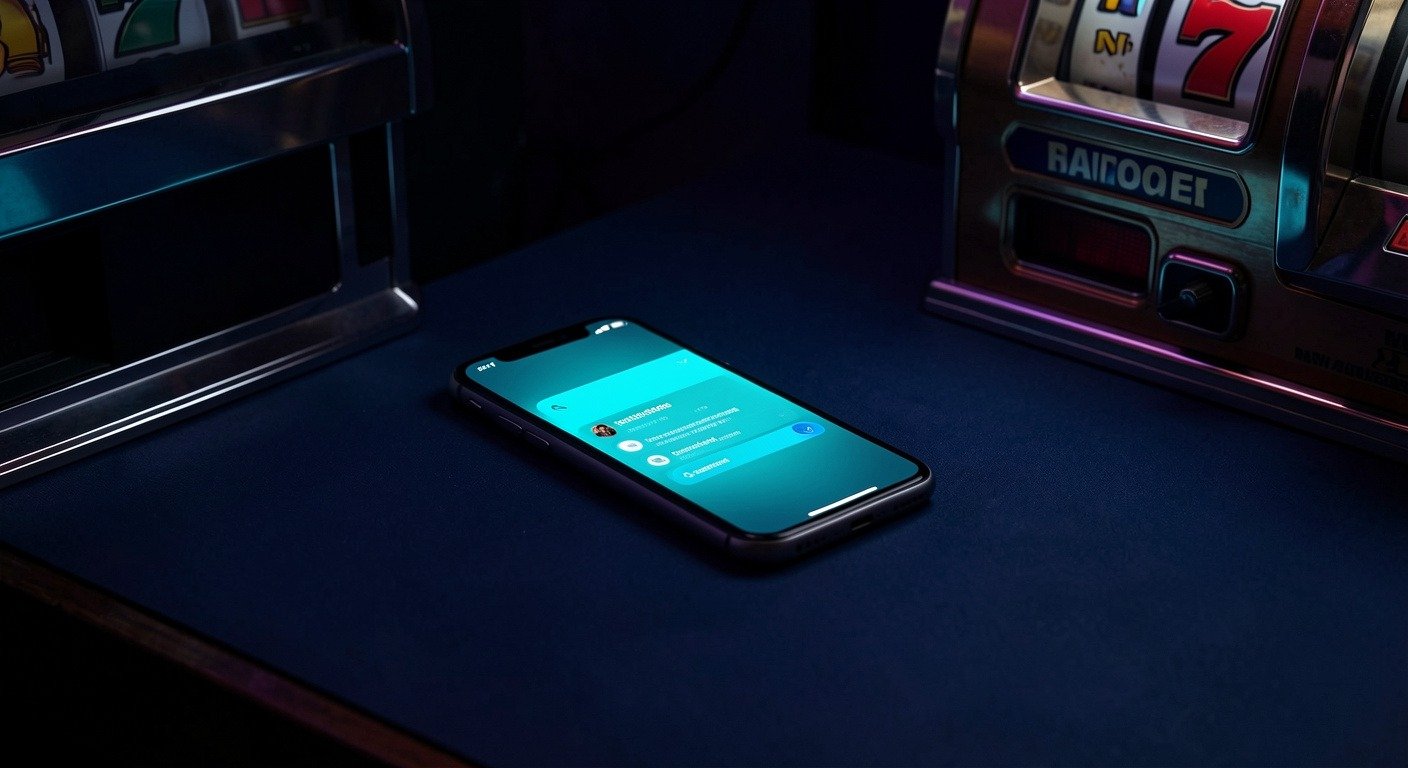
- Phone notifications operate on a variable reward schedule: the same psychological mechanism that makes slot machines nearly impossible to walk away from. Every ping is a lever pull, and the unpredictable payout keeps you checking.
- Dopamine spikes during the anticipation of a notification, not just when you read it. The “maybe this is something good” moment triggers a stronger brain response than the actual message content.
- Phantom vibration syndrome affects 41 to 87 percent of smartphone users. Your brain has been so conditioned by notification cues that it generates false sensory perceptions, buzzing that never happened.
- A one-week intervention reducing smartphone distractions measurably cut hyperactivity symptoms, with the strongest effects in heavy users. This wiring is not permanent. It responds to simple changes.
Phone notifications dopamine addiction is not a metaphor. The ping in your pocket and the spin of a slot machine trigger the same brain circuitry through the same behavioral mechanism, producing the same compulsive pattern. App developers did not invent variable reward schedules. They borrowed them from casino designers, who borrowed them from B.F. Skinner’s lab. The results are identical.
The Slot Machine in Your Pocket
B.F. Skinner discovered that rewards on an unpredictable schedule produce the highest response rates and the greatest resistance to giving up. He called this a variable ratio schedule. Press a lever, sometimes get food, sometimes nothing. The pigeon pecks relentlessly because it cannot predict which press pays out.
Slot machines use this exact mechanism. So does your phone. Each notification is a spin of the wheel. Some spins deliver a message from someone you care about, a win. Others deliver spam, a random app alert, or a headline you do not care about, a loss. The variable reward schedule phone users carry in their pockets is not an accident. It was engineered to maximize engagement time, which is what these platforms sell to advertisers.
Research in European Addiction Research found that smartphone engagement patterns mirror gambling behavior directly. How long you keep checking after a dry spell is linearly related to prior engagement. The more you have checked, the longer you persist when nothing arrives. This is the signature of a system optimized for compulsion, not satisfaction (James et al., 2019).
What Happens in Your Brain When You Hear a Ping
The notification dopamine brain connection explains why you reach for your phone before you even think about it. Wolfram Schultz’s lab has spent decades mapping dopamine’s role as a reward prediction error signal. Dopamine neurons do not fire for rewards you expect. They fire when something is better than predicted, or when a cue signals that a reward might be coming.
A notification sound is that cue. Your brain has learned that the ping predicts possible social reward. Dopamine surges during this anticipation window, the “maybe this is something good” moment. By the time you unlock your phone and read the notification, the dopamine peak has already passed. The anticipation was the real event. Phone notifications dopamine addiction is not about the content; it is about the uncertainty (Yan et al., PNAS 2025).
Berridge and Robinson’s incentive-sensitization theory distinguishes wanting from liking. Dopamine drives wanting: the craving, the urge, the pull toward the phone. Liking (the actual pleasure of reading a message) runs on a different neurochemical system. Notifications hijack the wanting circuit. They make you need to check even when checking delivers nothing satisfying. You scroll through fifty notifications, feel empty, and still reach for your phone minutes later.
Phantom Vibrations: When Your Brain Creates Notifications That Do Not Exist
Phantom vibration syndrome is a conditioned sensory hallucination. Your brain has learned to expect phone vibrations so strongly that it generates false perceptions, interpreting random muscle twitches, clothing friction, or blood flow as a buzzing phone. You reach for your pocket. Nothing is there.
A BMJ study found 68 percent of medical staff experienced phantom vibrations, with 13 percent reporting them daily (Rothberg et al., 2010). A 2026 Cognitive Neuropsychiatry study found 86.8 percent prevalence driven by problematic phone use. A 2026 Cureus study reported 41.4 percent prevalence, strongly associated with anxiety and sleep disturbance.
A longitudinal study of medical interns tells the clearest story. At baseline, 78.1 percent experienced phantom vibrations. During high-stress internship, that spiked to 95.9 percent, nearly universal. Two weeks after the internship ended, prevalence fell to 50 percent. The hallucinations are not permanent. They are conditioned responses that fade when the conditioning stops.
Switch your phone from vibrate to silent and phantom vibrations stop in approximately 75 percent of cases. The sensory hallucination depends on the sensory trigger. Remove the trigger, remove the hallucination.
The 5-Step Notification Reset
Step 1: Kill Non-Essential Notifications (5 Minutes)
Open your phone settings. Keep only phone calls, messages from close contacts, and calendar reminders. Turn off every social media alert, email ping, news push, and app marketing notification. This eliminates the variable reward cue at its source.
Step 2: Switch to Silent Mode (30 Seconds)
Disable vibrate mode entirely. The BMJ study found this stopped phantom vibrations in 75 percent of people. Without the tactile cue, your sensory cortex stops generating false positives.
Step 3: Batch Your Checking Windows (Ongoing)
Variable ratio schedules drive compulsive checking. Fixed interval schedules produce lower response rates. Choose 3 to 5 daily check windows and keep your phone face-down or in another room outside those windows. You are converting an addictive variable schedule into a manageable fixed one.
Step 4: Enable Grayscale Mode (1 Minute)
Bright colors and red badges trigger visual wanting cues (incentive salience). Grayscale strips that away. iOS: Settings, Accessibility, Display and Text Size, Color Filters, Grayscale. Android: Developer Options, Simulate Color Space, Monochromacy. Your phone becomes visually boring and you will check it less.
Step 5: Create Physical Distance (Immediate)
A 2019 study found that even a visible but unused phone impairs working memory (Canale et al., 2019). No phone in the bedroom, buy an alarm clock. No phone at the dining table. No phone for the first 30 minutes after waking. Physical distance creates attentional distance.
What the Brain Scans Show
Neuroimaging confirms smartphone cues reward system activation. A 2026 fMRI study found that notification sounds and phone images activate the ventral tegmental area and nucleus accumbens, the core dopamine reward pathway. These regions also activate in response to gambling and drug-related cues (Wolf et al., 2026).
Neuroimaging documents connectivity deficits in the VTA-NAc pathway, the dopamine superhighway from midbrain to striatum. Unpredictable notification rewards strengthen this pathway while constant task-switching weakens the prefrontal cortex responsible for impulse control. The imbalance makes ignoring notifications progressively harder.
This is the neural signature of phone notifications dopamine addiction: a reward circuit reinforced by thousands of unpredictable pings, paired with an executive control system steadily losing ground. Your brain is not broken. It adapted to a stimulus that did not exist until fifteen years ago.
Common Mistakes That Make It Worse
Mistake: Managing notifications instead of eliminating them. Sorting notifications into “priority” and “quiet” categories leaves the variable reward schedule intact. Your brain does not distinguish between a quiet ping and a priority ping. A cue is a cue. Eliminate, do not organize.
Mistake: Relying on willpower alone. The variable reward schedule is more powerful than conscious intention by design. If your phone is within reach and notifications are on, you will check it. Use environmental design, grayscale mode, physical distance, app timers, instead of white-knuckling through temptation.
Mistake: Believing phantom vibrations mean something is wrong with you. They mean your brain’s sensory learning system works exactly as designed. The conditioning was applied in an unnatural context. This is predictable neuroplasticity, not pathology.
Mistake: Dopamine fasting or detox protocols. These are pseudoscience. Dopamine is essential for movement, motivation, and learning. The goal is not to eliminate dopamine. The goal is to stop letting app developers manipulate it through engineered variable reward schedules.

The Intervention Evidence
The most encouraging finding is how quickly the brain responds. A 2022 controlled experiment assigned participants to limit smartphone distractions for one week. The intervention group showed significant reductions in hyperactive symptoms, with the strongest effects in people who had the highest problematic use at baseline (Wasmuth et al., 2022).
One week. That is how quickly measurable improvements appear when you stop phone notifications anxiety at its source. This is what makes phone notifications dopamine addiction different from substance dependencies. The underlying driver is not character weakness; it is a predictable neural response to an engineered stimulus. The brain adapted to the notification schedule. It will adapt to its absence just as readily.
The average smartphone user receives 46 to 80 push notifications per day and checks their phone 58 to 96 times; heavy users exceed 150. Each check is a lever pull costing attentional continuity. Task-switching research shows that it takes 15 to 25 minutes to recover focus after an interruption. At 80 checks a day, deep focus never establishes itself.
Your Turn: Sit With This
Before you change any settings, open your phone’s Screen Time or Digital Wellbeing dashboard. Look at the number. How many times did you pick up your phone yesterday? How many notifications arrived? Now ask yourself: how many of those notifications were from actual humans you care about, and how many were from apps that do not know your name?
Second question: the next time you feel a phantom vibration, pause before reaching. Notice the impulse without acting on it. What does that moment feel like in your body? That feeling is the wanting circuit, and observing it without feeding it is the first step toward rewiring it.
- Related: Digital Habit Loops: How Phone Checking Rewires Your Brain, the cue-routine-reward cycle behind compulsive smartphone use and how to break it.
- Related: Doomscrolling Neuroscience: Why You Cannot Stop and How to Take Back Control, the same dopamine anticipation loop applied to infinite news feeds.
- Related: Short-Form Video Addiction: What 60-Second Clips Do to Your Brain, variable rewards in video format, and why TikTok’s algorithm is the slot machine’s digital twin.
Disclaimer: This article is for educational and informational purposes only and is not a substitute for professional medical advice, diagnosis, or treatment. If you are concerned about your relationship with technology, consult a licensed mental health professional.